The Canvas breach proved that prevention is no longer enough
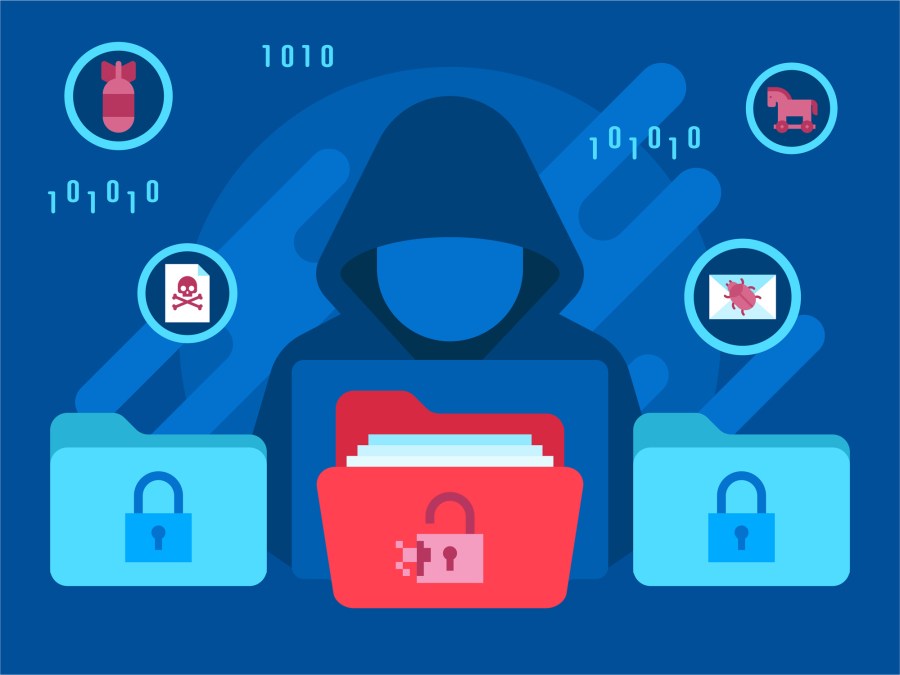
Earlier this month, ShinyHunters breached Instructure’s Canvas platform twice within a single week — stealing 3.65 terabytes of data from approximately 275 million users across more than 8,000 institutions. The group defaced login pages at hundreds of schools during final exam periods, forced Canvas offline, and extracted a ransom payment before Congress opened a formal investigation. The attack did not require exotic malware or zero-day exploits. Attackers entered through compromised “Free-For-Teacher” accounts, escalated rapidly, and exfiltrated sensitive data at scale before Instructure could contain them.
That sequence — entry through weak identity controls, rapid lateral movement, mass exfiltration, extortion, disruption — is now the standard playbook. It will happen again, unless the priority for security and technology leaders becomes reducing the blast radius of every intrusion before it happens.
The problem with how enterprises think about SaaS risk
Modern organizations have consolidated critical operations inside shared SaaS platforms, creating enormous concentrations of risk in single points of failure. When Canvas went down, thousands of students could not access coursework, faculty lost contact with their classes, and administrators scrambled to postpone exams. The scale of disruption came from how deeply institutions depended on Canvas, not from the vulnerability alone.
That asymmetry is the defining feature of SaaS risk in 2026. A single compromised account at a shared platform can trigger sector-wide operational failure. Yet most enterprise security frameworks still treat SaaS platforms primarily as availability problems — measured by uptime, recovery time objectives, and business continuity plans. Canvas exposed the gap in that thinking. Availability means nothing when the platform is operational but the data inside it has already been stolen.
Resilience in SaaS environments requires a harder and more honest premise: treat compromise as continuous and expected. Attackers will reach critical systems. The real test is how much they can take, how far they can move, and how long they can persist before detection and containment.
Identity is the perimeter now
The Canvas attack followed a pattern that has repeated across sectors for years. By compromising legitimate accounts with excessive standing privileges, the attackers moved laterally through Canvas infrastructure, maintained persistence, and exfiltrated data at a scale that took days to quantify.
Too many organizations still operate with fragmented identity controls, inconsistent privilege management, and limited visibility into how accounts interact across SaaS integrations. When attackers compromise a legitimate account, they inherit whatever access that account holds — and in most environments, that access far exceeds what the user actually needs. The result is that identity has become the most reliable attack surface in the modern enterprise, and most organizations are still treating it as a secondary concern.
Strong passwords and multifactor authentication are necessary but no longer sufficient. Enterprises need continuous identity verification, tightly scoped privileges, aggressive governance over third-party integrations, and real-time visibility into anomalous access patterns across SaaS systems. Identity governance cannot be a compliance checkbox. In cloud-native environments, it should be the primary control that determines how far an attacker can travels if they manage to get inside.
Data protection cannot stop at the application layer
Even organizations with strong identity controls face a second, underappreciated problem: the data stored inside SaaS platforms is often far less protected than the credentials used to access it.
Enterprises accumulate vast repositories of sensitive information inside SaaS environments — private messages, accommodation requests, financial records, personal disclosures — while relying almost entirely on application-level access controls to protect it. When those controls fail, as they did at Canvas, the data is immediately readable, searchable, and monetizable.
Attackers do not need to crack anything. They simply take it.
Cryptographic protections — including encryption strategies that preserve organizational control over sensitive data even after it leaves the platform — directly reduce the value of a successful exfiltration. Stolen data that cannot be read or used is far less valuable as an extortion instrument. That distinction matters significantly in today’s threat environment, where the leverage attackers extract from stolen data often outlasts the breach itself.
The threat does not expire when the incident ends
The “agreement” between Canvas’s parent company and attackers illustrates a risk that most organizations have not yet fully priced in. While Instructure received digital confirmation that the stolen data was destroyed, Congress opened an investigation anyway. The Instructure CEO has been called to testify before the House Homeland Security Committee. Affected institutions — many of which had no visibility into Instructure’s security posture or incident response capabilities — remain accountable for protecting student data they can no longer control.
That accountability gap will not close after Congress concludes its inquiry. Sensitive data stolen during incidents like Canvas retains value long after the breach itself. Adversaries increasingly collect encrypted data today with the expectation that it can be decrypted later as cryptographic standards age or quantum computing capabilities mature. This “harvest now, decrypt later” approach means that encryption protecting data only in the present still leaves organizations exposed downstream.
Strong cryptographic protection must therefore be paired with crypto-agility and post-quantum readiness. Security leaders should assume that any sensitive data exfiltrated during a SaaS breach may remain a target for years, not days. If stolen data remains immediately usable, attackers retain leverage indefinitely. If it does not, the economics of extortion shift.
What the Canvas breach actually demands
The lesson from Canvas is not that SaaS platforms are inherently insecure. They remain foundational to how modern organizations operate and scale. The lesson is that the assumptions underlying most enterprise security strategies — that prevention is the primary objective, that access controls are sufficient data protection, that recovery means restoring uptime — no longer match the realities of today’s threat environment.
Attackers have already internalized this. They target SaaS platforms precisely because the concentration of data and operational dependency makes them extraordinarily high-value targets. They exploit identity weaknesses because those weaknesses are pervasive and reliable. They apply extortion pressure because stolen data retains leverage long after technical remediation.
The organizations that close this gap — by treating identity governance as mission-critical infrastructure, implementing cryptographic protections that survive exfiltration, building recovery discipline alongside prevention, and planning for post-quantum exposure — will be significantly better positioned when the next breach arrives. And it will arrive. The only variable is how much it costs.
Rishi Kaushal is the CIO of Entrust, a company that helps organizations fight fraud and cyber threats with identity-centric security.