Don’t just fight fraud, hunt it
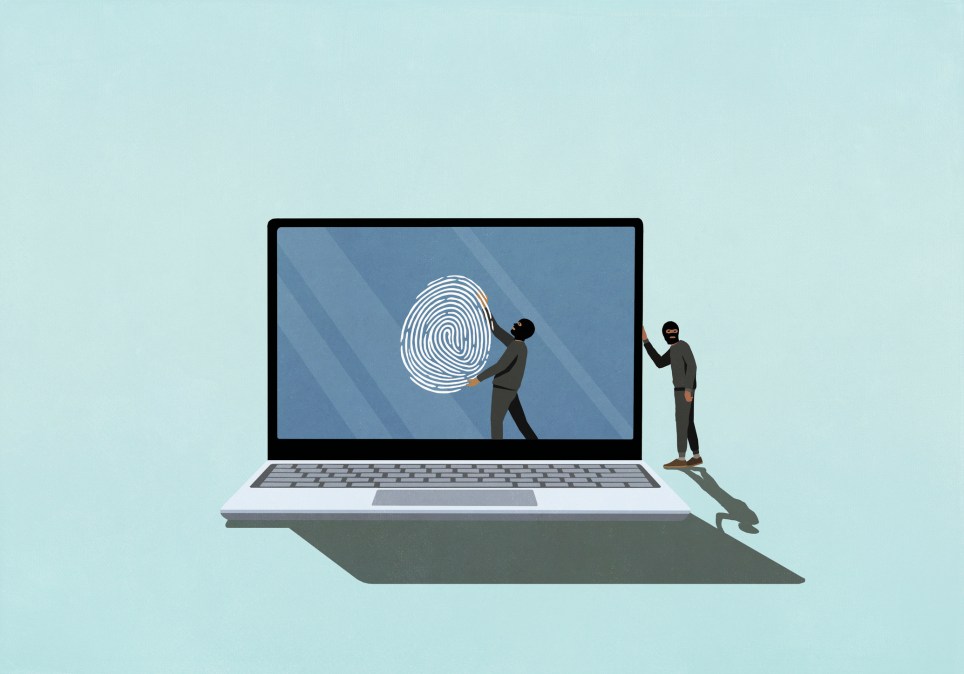
Our nation has entered a new fraud arms race fueled by AI.
With billions of dollars in fraud losses mounting in both the private and public sectors, it’s clear the old ways of deterring fraud aren’t working. That’s why we need a new playbook that starts with understanding how fraudsters operate, evolving our defenses, and shifting to a proactive posture that doesn’t just fight fraud but actively hunts it down.
In the AI era, treating fraud as just a front-door problem won’t work. This moment requires industry, government, and consumers to work together, reduce silos, and share real-time intelligence. The goal is to move beyond reactive detection by understanding the lifecycle of a threat—from its formation to its spread—so we can intervene before it establishes a foothold.
For decades, fraud has been treated like a series of isolated incidents. This false assumption has underpinned nearly every past effort to crack down on it. Those efforts, while well-intentioned, have missed the mark.
Now, in light of the Trump Administration’s Cyber Strategy for America and accompanying executive order, it’s critical to understand the modern fraud landscape and the central role that digital identity exploitation plays within it.
New research from Socure reveals just how dramatically the landscape is evolving.
Fraud has become industrialized, with organized crime syndicates running operations that are global, systemic, automated, and powered by AI. No organization, service, or program is safe. Fraudsters target government programs, banks, fintech platforms, telecom companies, and more, blurring the lines between public sector fraud, financial crime, and cybercrime.
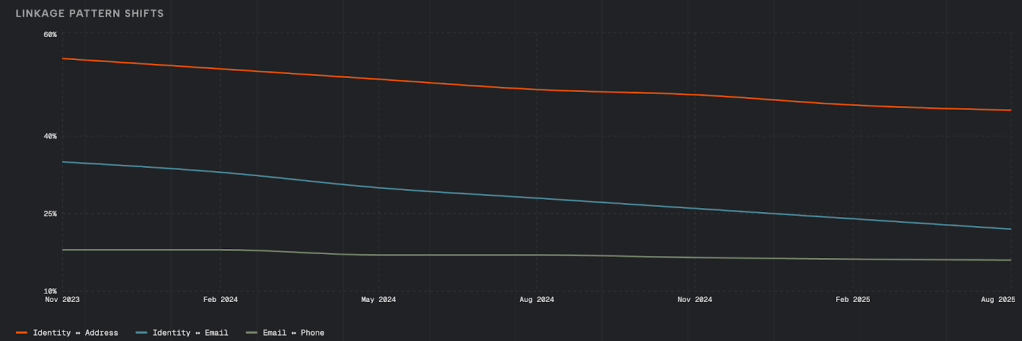
It used to be that fraud could be detected through the reuse of identity elements across multiple applications: the same email, device, phone number, or IP address used over and over.
But the data is clear: these links are declining fast. Today’s sophisticated fraudsters are now engineering their attacks to avoid traditional fraud detection patterns. Our research demonstrates that emails will be completely unique within fraud populations as soon as 2027, so we won’t be able to rely on email to identify patterns.
Speed is another defining feature of modern identity fraud. Fraudsters use AI to create clean, durable, synthetic and stolen identities at scale. In one observed campaign, 24,148 synthetic identities were built and launched in under a month, with many attacks occurring within 48 hours. What once took weeks or even months can now be completed in days.
The rapid rise of identity farms is another indicator of the industrialization of fraud. Identity farms are operated by crime rings to systematically create synthetic or stolen identities over time in order to closely resemble legitimate identities. Matured identities are used to open bank, credit, and money-movement accounts, siphon government benefits, launder funds, and more. These identity farms focus on durable identities that can bypass traditional verification controls.
So what should we do? Simply put, we must go on offense.
This means treating identity as critical infrastructure and implementing strategies that track how identities were created before the moment of application; expanding signals monitoring to include elements like residential proxies, ISP behavior, and domain registration activity; evaluating velocity and orchestration in real-time; and treating continuous measurement, rapid model iteration, and cross-industry intelligence as core capabilities.
Additionally, given the rapid scaling of fraud, we need more analysis of the complete ecosystem, including dynamic factors like device information, digital footprints, and behavioral biometrics so organizations can effectively distinguish genuine humans from machines. Ultimately, this layered and interconnected approach makes it significantly harder for malicious actors to recreate or steal identities at scale.
Fraud is no longer a series of isolated acts. It is a coordinated, global enterprise built on the exploitation of identity. Until our efforts reflect this new reality, we will continue to fight an imminent and ongoing threat with outdated tools and fall further behind.
Now is the time to make this strategic shift and finally put fraudsters on their heels.
Mike Cook serves as head of fraud insights at Socure, the identity and risk platform for the AI age.