Lawmakers from both parties say CISA cuts have gone too far
Two cybersecurity-focused members of Congress agreed Thursday that reductions to the Cybersecurity and Infrastructure Security Agency have done too much damage to an agency essential to defending civilian networks against foreign adversaries.
Rep. Don Bacon, R-Neb., and Rep. James Walkinshaw, D-Va., spoke during a panel at the National Cyber Innovation Forum. Despite representing different parties, and serving on different congressional committees, the two lawmakers offered closely aligned assessments of CISA’s role and the consequences of recent cuts.
Bacon, who is the chairman of the House Armed Services Subcommittee on Cyber, Information Technologies, and Innovation, framed the agency as central to protecting domestic networks.
“What we really need is a strong CISA that helps protect our domestic networks, our energy grids and things like that,” he said, before adding that “unfortunately” the administration had moved in the opposite direction over the past year.
He said officials had not appreciated the agency’s defensive value, telling the audience he did not think they recognized the “one-for-one output” CISA provides.
Walkinshaw, who is a member of the House Homeland Security Committee, echoed that view and tied it directly to the threat picture.
Referring to Chinese-linked intrusion campaigns like Salt Typhoon, he said the United States is contending with adversaries “getting into critical infrastructure overseas and coming after big parts of our critical infrastructure industry here at home.” He said CISA’s information-sharing function and its relationships with utilities and local governments are part of what makes a centralized civilian defense workable.
Both lawmakers placed their concern in the context of a threat environment they described as escalating. Bacon ranked China as the leading cyber adversary to the United States, surpassing Russia, and said intrusions lay groundwork for further actions. “They’re in our energy grid,” he said. “On Day 1 of the war, they want to turn off our energy.”
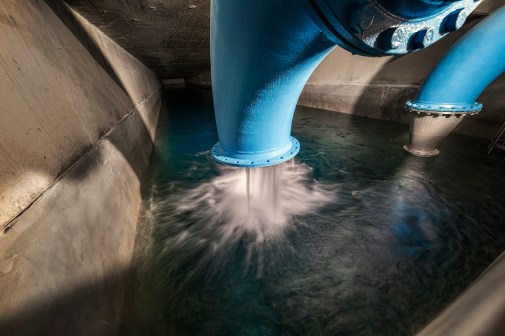
The case for a well-resourced CISA, the two lawmakers said, rests on the fact that most of the entities targeted by foreign actors cannot defend themselves on their own. Walkinshaw drew on his work during his time as a county supervisor in Fairfax County, Va., where he worked with Fairfax Water. He said that even as that utility was “one of the most sophisticated, well-funded water authorities in the country,” it struggled to keep pace with the volume and sophistication of attacks. Smaller utilities, towns and businesses, he said, have no realistic path to defending themselves against a nation-state.
Bacon agreed. He said small companies are “the heart of American innovation” but cannot be expected to stand up to adversaries operating with the resources of China, Russia, Iran or North Korea without federal support.
President Donald Trump’s fiscal 2027 budget would cut CISA by $707 million, according to a summary released last month, though a separate budget document points to a smaller reduction of $361 million. Either figure would leave the agency with slightly more than $2 billion in discretionary funding, down from the roughly $3 billion it had at the start of the administration.
It has been a turbulent time for CISA during the second Trump administration, in which the agency lost roughly a third of its personnel, shuttered entire divisions and operated without a Senate-confirmed director. Former officials, industry partners and lawmakers from both parties have described diminished coordination with state and local governments, weakened relationships with the private sector and growing concern about whether the agency retains the capacity to manage a major cyber crisis.
In the model both lawmakers endorsed, they pushed for CISA to play more of a role after an intrusion, helping affected entities restore their networks while the FBI works to identify the source. Walkinshaw said advanced artificial intelligence expands the attack surface and makes that kind of centralized support more important.
“The advanced AI technology means that more and smaller, maybe not as well-funded organizations across the globe, can launch sophisticated attacks,” he said, adding that the result is that “the defense” becomes “more complex.”
Looking ahead, Walkinshaw said restoring CISA’s capacity should be within reach of a divided Congress.
“In terms of bipartisan areas of agreement here in Congress, restoring and expanding those capabilities and those partnerships right now should be a top priority,” he said.