Why data centers now belong on the critical infrastructure list
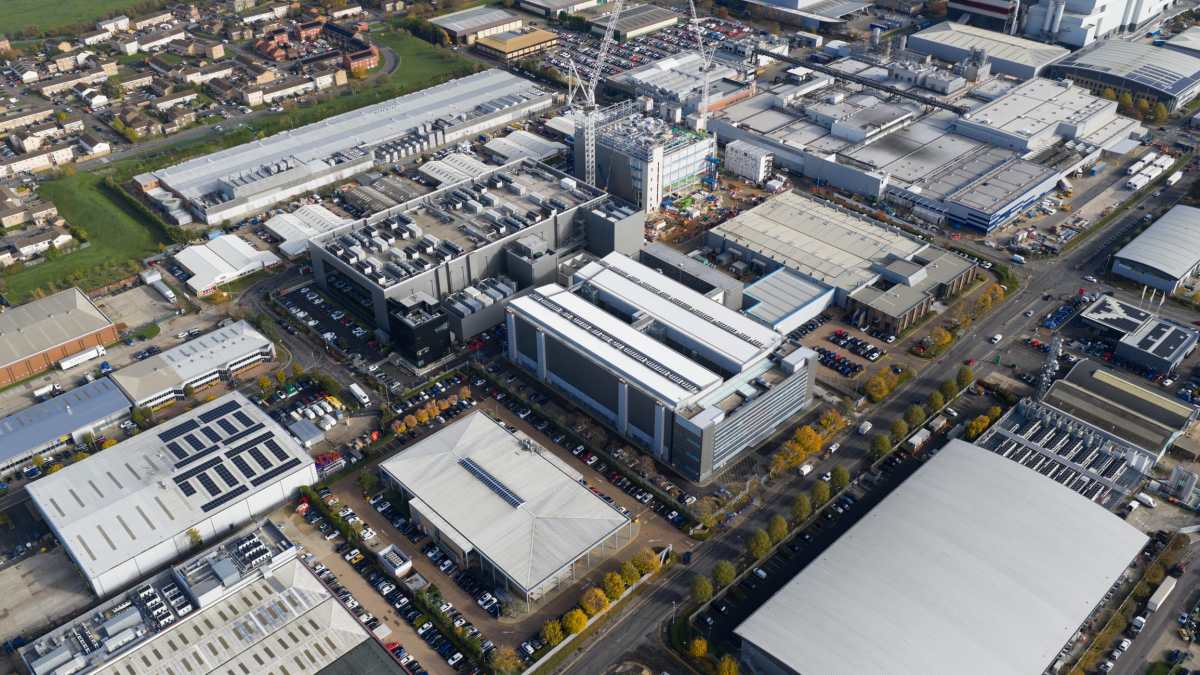
Missile and drone attacks that took out cloud data centers in the Middle East underscored a critical vulnerability in the modern economy: reliance on digital infrastructure that sustains competitive advantage and operational continuity for corporations, nations, and militaries.
The outages and downstream disruption were a preview of a new form of strategic and operational risk. Data centers have long been the backbone of the digital economy. What is changing is the scale of dependence as AI workloads dramatically increase the compute power required to run businesses, supply chains, and national security systems.
Artificial intelligence has moved beyond business applications and into the core of warfare and national security. Last month, The New York Times reported that AI is “totally integrated” into the collection of intelligence and its use in strategic decision-making and military operations. Even if AI models are not directly firing weapons, AI-enabled analysis now plays a central role in how modern militaries gain visibility, find insights, and drive action.
That matters because it changes what should be considered critical infrastructure. If AI is a competitive advantage for companies and a battlefield advantage for warfighters, then the infrastructure that trains, hosts and runs AI becomes a high-value target. Attacks on the digital infrastructure organizations rely on can do more than inflict financial damage. They can slow decision-making, degrade logistics and reduce military effectiveness without ever engaging a conventional force.
Historically, nation-state campaigns targeting data centers and service providers focused on cyber intrusions for espionage or pre-positioning. What is different now is the emergence of physical attacks on digital infrastructure during active conflict. Russian military intelligence has been linked to campaigns aimed at digital infrastructure and managed services, often as part of a supply chain attack to compromise organizations at scale. Iran-aligned groups have repeatedly demonstrated willingness to target private sector entities to advance geopolitical goals. In many cases, the objective was access: steal data, implant persistence, map networks, and maintain a foothold that could be used later for espionage or disruption.
What’s clearer now than ever before is that data centers and the AI workloads they support have become so vital to modern society, our adversaries will seek to degrade or destroy their efficacy as a tactic of both kinetic and cyber warfare.
We have already seen how quickly a digital incident can become real-world disruption. On March 11, reports surfaced of thousands of servers and endpoints wiped inside Stryker, a U.S.-based medical device manufacturer. A hacktivist group sympathetic to Iran, known as Handala, claimed responsibility. The incident reportedly halted Stryker’s global production after attackers accessed its Microsoft environment and issued a wipe command via Intune. Even without a single missile, the outcome looked like a strategic disruption: operations stopped and downstream customers felt it.
For business leaders, the imperative is clear: treat operational resilience as a board-level priority in the AI era.
In the world of corporate IT, cybersecurity prioritizes confidentiality: preventing theft of sensitive information. Resilience is a different discipline. It is the ability to sustain operations when systems are degraded, disrupted or actively under attack. For data centers and the businesses that depend on them, resilience comes down to preventing cascading failures and reducing the consequence when something inevitably goes wrong.
These developments carry an important implication for the private sector. Digital infrastructure is increasingly a strategic target, making resilience a core business priority rather than a narrow IT issue. For business leaders, the impact of data center disruption extends into multiple, often overlooked areas of cybersecurity risk.
For example, AI’s growth is colliding with a power wall in many regions where grid capacity cannot scale fast enough. That is driving facilities toward new power dependencies, including on-site generation through distributed energy and renewables, yielding more complex power management environments. This power infrastructure becomes a pressure point as interruptions to power supply or management systems can quickly force a data center offline. Russia has on several occasions demonstrated the ability to target and disrupt power generation and distribution in Ukraine in both 2015 and 2016.
Building management and automation systems, including HVAC and physical access controls, are another. These systems are essential to creating safe and supporting operational environments, but they typically have long capital depreciation cycles and inconsistent security safeguards. Frequently exposed to the Internet, and commonly misconfigured and not properly secured, they can become a pathway to outages by an attacker.
With an increasing density of computing infrastructure, thermal management has become a core environment control in data centers. As the industry adopts liquid cooling for dense AI loads, interference with cooling is no longer a niche technical issue. It is a risk vector that can cause downtime and potential equipment damage if breached by attackers.
Remote access creates another major exposure. Data centers rely on vendors, contractors, and systems integrators for maintenance, monitoring, and support, and each remote connection can become an entry point if it isn’t tightly controlled, centrally managed, and well secured. Adversaries often target these trusted access routes because they can be easier to compromise than a well-defended perimeter, allowing attackers to bypass standard controls and safeguards.
All of this has broader economic implications because data center disruption does not stay inside the technology sector. It cascades into the industries that keep society functioning and supply chains moving: hospitals, electric utilities, chemical production, food and beverage, oil and gas, and transportation. An extended outage becomes missed shipments, halted production, delayed care, safety concerns and lost trust.
What should leaders do now?
Start by defining resilience targets that match business reality: what must stay running, what can degrade, what cannot fail. Then invest in the controls that limit the impact of an incident. Segmentation between IT and OT assets should be non-negotiable. Remote access should be treated as a critical risk pathway with least privilege, strong authentication and continuous monitoring.
Manage facilities systems such as building management systems, power, and cooling controls as critical operational technology, with asset inventories, vulnerability management, logging, and incident response plans that anticipate disruption.
Finally, train to operate under degraded conditions. Tabletop exercises should include scenarios like loss of a cloud region, partial failure of a facility, or compromise of a management plane. Use these exercises to validate that the organization can maintain essential operations and recover quickly when disruptions occur.
Policy is moving in this direction as well. Governments are increasingly treating data centers as critical infrastructure. Policies and frameworks such as the National Cybersecurity Strategy, CISA’s Secure by Design principles, and international standards like IEC 62443 all reflect a growing recognition that digital infrastructure is a national security issue. Companies that get ahead of this shift will not only reduce risk, they will build competitive advantage in a world where downtime can become a strategic weapon.
In the AI era, data centers are essential infrastructure for modern economies and national security. Their rising importance also makes them attractive targets in cyber and physical conflict. Protecting them is no longer just about safeguarding company operations, it is about protecting the systems society depends on every day.
Grant Geyer is the chief strategy officer at Claroty.