Lawmakers, election officials blast Trump administration after Fulton County raid
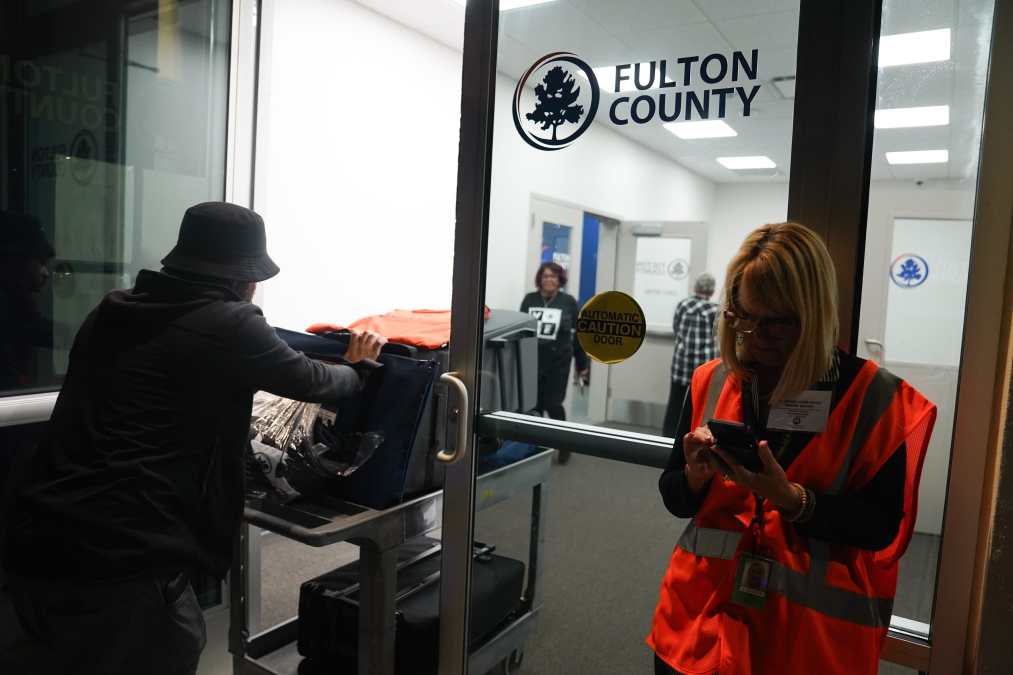
Following a federal raid on Fulton County, Georgia’s Elections Office, lawmakers and state election officials sharply criticized the Trump administration, accusing the White House of chasing baseless internet conspiracy theories about fraud in the 2020 election. Officials also warned the raid could set a precedent for similar federal actions targeting the 2026 midterm elections.
According to Fulton County, federal officials seized 700 boxes of records related to the 2020 election, including physical ballots. The search warrant detailing a full list of records and evidence sought by the federal government remains sealed, however, details of the warrant were published by ProPublica Wednesday evening.
In a press conference Thursday, Fulton County Board of Registration and Elections Chair Sherri Allen said the county was already planning to hand over the information at a court hearing scheduled for early February. Meanwhile, Fulton County Commission Chair Robb Pitts expressed concerns about ballot security now that the ballots are no longer in county custody.
At the National Association of Secretaries of State winter conference, Sen. Alex Padilla, D-Calif., said the federal raid should be a reminder “this can happen any point between now and this coming November.”
He also took a shot at the Trump administration’s state voter data collection efforts and the White House’s plan to conduct voter list maintenance “at the federal level.”
“Republican and Democratic secretaries: How does that make you feel about what they think about your integrity and professionalism?” Padilla said. “Those are your offices, your staff and teams.”
Jared Borg, a White House aide at the Office of Intergovernmental Affairs, gave a speech Thursday detailing how the Trump administration is repurposing the federal SAVE database as a voter citizenship verification tool. The database was historically used to track immigrant benefits, and Borg said the DOGE-led overhaul of SAVE in 2025 came in response to requests from states for better functionality to cross-check voters. Previously, SAVE charged states $1 for each name lookup and did not allow bulk searches. Now, Borg said, state officials can run “millions of queries at no cost.”
Afterwards, Borg faced numerous questions and criticisms from state secretaries and officials who challenged the federal government’s role in setting election rules.
Some Republican state officials, like Utah Lt. Governor Deidre Henderson, pushed back hard against the Trump administration’s approach with election officials, pointing to comments from Assistant Attorney General Harmeet Dhillon and others.
“Things that have been said publicly, frankly, are quite appalling,” said Henderson, who oversees elections in her state. “She pretty much slandered all of us, and to me that’s problematic, to publicly claim that Secretaries of State are not doing our jobs and the federal government has to do it for us. That is not okay.”
Arizona Secretary of State Adrian Fontes told CyberScoop that he believes the federal government’s efforts are to serve “the grievance of one person, because he’s a sore loser, and it’s embarrassing.”
“This is outrageous that we’re still relitigating what happened six or seven years ago from a guy who is currently president of the United States,” Fontes said in an interview.
While he’s confident in the integrity of Arizona’s elections should a similar federal raid occur, Fontes noted the “enormous amount of power” prosecutors have.
“They can do enormous damage to the integrity of systems, to the trust that people have in systems, to personal lives, and they can do it through this purportedly legal framework,” he said.
Borg said Director of National Intelligence Tulsi Gabbard, along with Homeland Security Secretary Kristi Noem, would provide further details on the administration’s plans during appearances at the conference on Friday.
Gabbard’s presence at the Fulton County raid has puzzled and alarmed veterans of ODNI’s election team and Democratic lawmakers. Among the concerned lawmakers is Sen. Mark Warner, D-Va, who sits on the Senate Select Committee on Intelligence Committee, which oversees ODNI.
“Why is Tulsi Gabbard at an FBI raid on an election office in Fulton County?” asked Warner, who has long focused on election security issues, from boosting federal funding for states to replace outdated equipment and coordinating with ODNI’s election threats team.
By law, ODNI and its election team are supposed to focus on foreign threats from abroad, such as disinformation campaigns and hack-and-leak operations carried out by hostile governments. Under the Biden administration, the office had a defined process for investigating, vetting and communicating intelligence about ongoing foreign threats to victims. The office also periodically updated Congress and the public about campaigns, including where they originated, what resources were being deployed and who was being targeted.
In these briefings, officials deliberately used neutral language and avoided partisan messaging to prevent the process from appearing politicized.
One possible rationale for Gabbard’s presence: right-wing media has circulated conspiracy theories that claim foreign countries like Venezuela, China or Italy conspired with the CIA and other federal agencies to remotely hack into U.S. voting machines. After U.S. forces raided Venezuela and removed President Nicolas Maduro from power, Trump retweeted a post about one such theory called “Hammer and Scorecard.” Weeks earlier, Trump had suggested he intended to pursue prosecutions for election fraud.
Attorney General Pam Bondi has also directly connected ongoing immigration enforcement efforts in Minnesota to the administration’s push to collect sensitive voter data from states––either voluntarily or through lawsuits. The administration and some states have used this data to aggressively challenge the eligibility of legally registered voters. These challenges often target voters over minor paperwork errors that are decades old. Experts overwhelmingly say such errors have no meaningful impact on voters’ active registration status.
The administration has sued dozens of states, but has lost repeatedly in court. Multiple federal courts have ruled that the DOJ’s demands as legally baseless and are an unconstitutional overreach by the executive branch.
On Thursday, 26 Senate Democrats demanded briefings from Bondi and other administration officials to answer questions about the data gathering efforts. The senators noted that courts have already thrown out the administration’s lawsuits in Oregon and California. Meanwhile, 11 states–including Texas–have provided the administration with voter data, which has “dramatically increased” the amount of voter information flowing to the federal government.
“While most states are resisting this illegal voter roll grab, we are gravely concerned by the amount of sensitive data the Department has already amassed on millions of American voters,” the senators wrote. “The Department has failed to provide Congress, or the public, any information on how it is maintaining this vast amount of data, the guardrails in place to protect state voter information, how the data is to be used, or who in the federal government has access to this sensitive data.”