The long-awaited Trump cyber strategy has arrived
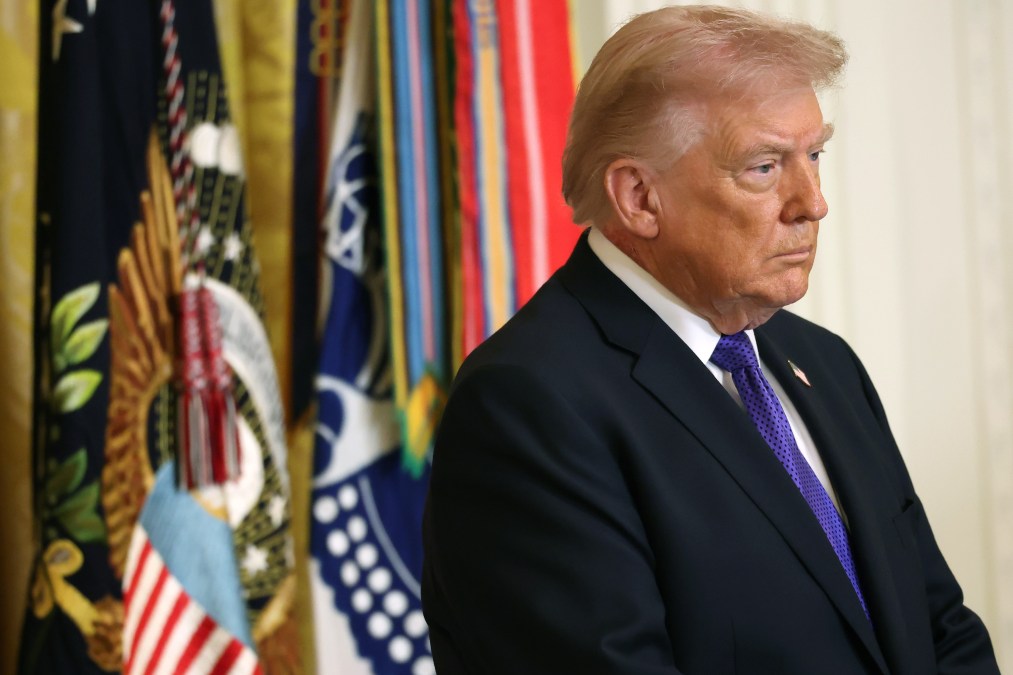
President Donald Trump released his administration’s cyber strategy Friday, promoting offense operations in cyberspace, securing federal networks and critical infrastructure, streamlining regulations, leveraging emerging technologies and strengthening the cybersecurity workforce.
Trump also signed an executive order Friday directing agencies to take action to combat cybercrime and fraud.
A little more than half of the five pages of strategy text of the long-anticipated document is preamble, and two of its seven pages are title and ending pages. Administration officials have said the strategy is deliberately high-level, and the White House promised more detailed guidance in the future.
The strategy “calls for unprecedented coordination across government and the private sector to invest in the best technologies and continue world-class innovation, and to make the most of America’s cyber capabilities for both offensive and defensive missions,” the White House said in a statement accompanying its release.
Each of the six “pillars” of the strategy offer some prescriptions.
“Shaping adversary behavior” calls for using U.S. government offensive and defensive capabilities in cyberspace, as well as incentivizing the private sector to disrupt adversary networks.
It also says Trump will “counter the spread of the surveillance state and authoritarian technologies that monitor and repress citizens,” even as administration critics argue that his administration has fostered surveillance and repression against U.S. citizens.
The shortest pillar, “promote common sense regulation,” decries rules that are only “costly checklists.” The Biden administration expanded cyber regulations, spurring some industry resistance. But the Trump pillar does talk about addressing liability, a point of emphasis for the prior administration as well.
“Modernize and secure federal networks” talks about using concepts and technologies like post-quantum cryptography, artificial intelligence, zero-trust and lowering barriers for vendors to sell tech to the government to meet those goals.
To “secure critical infrastructure,” the strategy calls for fortifying not just owners and operators but also the supply chain, in part by focusing on U.S.-made rather than adversary-made products.
“We will deny our adversaries initial access, and in the event of an incident, we must be able to recover quickly,” the strategy reads. “We will galvanize the role of state, local, Tribal, and territorial authorities as a complement to— not a substitute for — our national cybersecurity efforts.” Some critics of the administration’s cybersecurity actions have contended that it has shifted the burden to state and local governments too much.
AI usage makes up the bulk of the pillar entitled “sustain superiority in critical and emerging technologies,” in addition to reflecting earlier parts of the strategy on the topics of quantum cryptography and privacy protection. That includes the protection of data centers, the subject of localized fights across the country over their location and resource costs.
The final pillar says the United States must “build talent and capability,” after a year of the administration cutting a significant number of cyber positions in the federal government. “We will eliminate roadblocks that prevent industry, academia, government, and the military from aligning incentives and building a highly skilled cyber workforce,” it states.
Some positive reviews rolled in about the strategy despite the late-Friday afternoon release, traditionally the time of week when an administration looks to publish news it hopes will garner little attention.
“As new and more sophisticated threats emerge, America needed a new national cyber strategy that captures the urgency of this moment,” USTelecom President and CEO Jonathan Spalter said in a news release. “The President’s strategy rightly recognizes that harnessing America’s unique mix of private-sector innovation with public-sector capacity is the best deterrence.”
Frank Cilluffo, Director of the McCrary Institute for Cyber and Critical Infrastructure Security at Auburn University, was struck by the focus on deterrence: “This unified strategy determining a direction on offensive and defensive cyber operations and collaboration couldn’t be more timely.”
The Business Software Alliance cheered the call for streamlining cyber regulations, in particular.
A number of cyber vendors took note of the passages on AI. “Redirecting resources from paperwork to AI-powered security capabilities is the only way to keep pace with modern threats and adversaries who operate at great speed,” said Bill Wright, global head of government affairs at Elastic. “This strategy appears to recognize that fundamental truth.”
Not all the reviews were flattering, however, including from the top Democrat on the House Homeland Security Committee, Bennie Thompson, who said the strategy’s “underachieving” was the only thing impressive about it.
“What little ‘substance’ does exist in this pamphlet is a mishmash of vague platitudes, a long catalogue of ‘we will’ statements that may or may not match the Administration’s current behavior, and, mercifully, an apparent extension of some Biden-era policies,” he said. “Completely lacking is even the most basic blueprint for how the Administration will go about achieving any of its cybersecurity goals — an objective possibly hamstrung by the hemorrhage in cyber talent across all Federal agencies since Trump took office.”
The executive order Trump signed Friday coincides with the release of the strategy but there’s little overlap between the subject matter; the strategy makes one mention of cybercrime.
The order directs the attorney general to prioritize prosecution of cybercrime and fraud, orders agencies to review tools that they could use to counter international criminal organizations and gives the Department of Homeland Security marching orders to improve training, in addition to other steps, according to a fact sheet.
“President Trump is unleashing every available tool to stop foreign-backed criminal networks that exploit vulnerable Americans through cyber-enabled fraud and extortion,” the fact sheet states.