States are building their own election defense networks as federal support evaporates
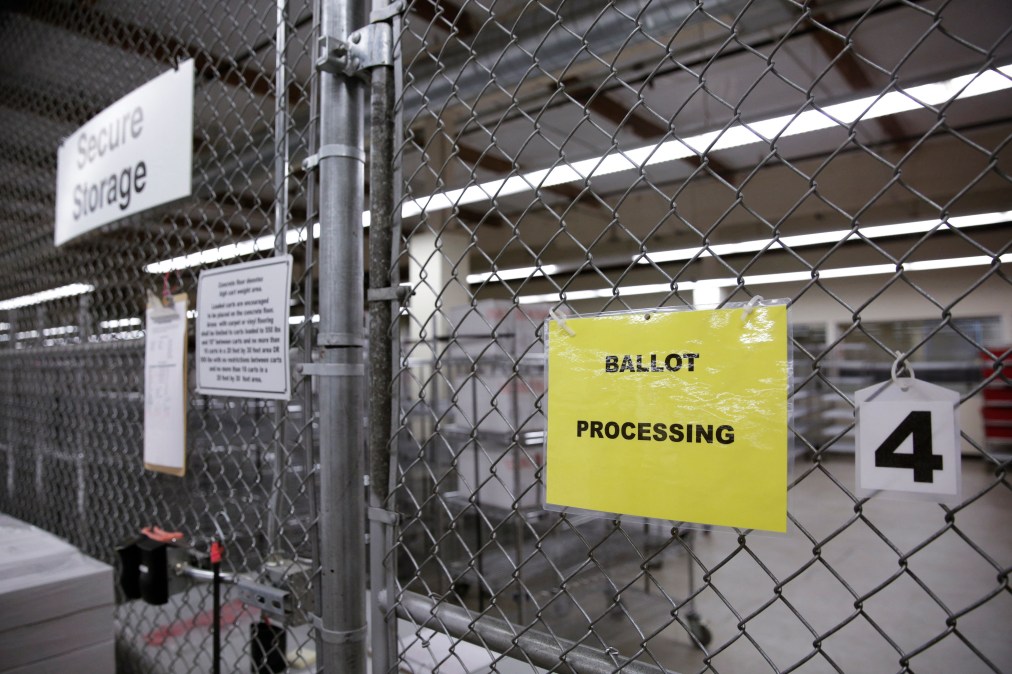
The Trump administration’s abrupt firing of Election Assistance Commission commissioners last week and a Department of Justice warning threatening states with criminal prosecution have created new legal peril for officials who run, administer and secure elections.
The EAC is an obscure but important agency that oversees testing and standards for voting machines, including around security. While federal certification is voluntary, states have until now relied upon their stamp of approval when purchasing voting machines.
On July 10, Democratic Commissioners Ben Hovland and Thomas Hicks were fired by the White House, while reports indicate that a third Commissioner, Republican Christy McCormick, resigned. While Congress mandated the commission be bipartisan, the Supreme Court has recently given the President broad authority to fire executive branch officials at will.
In an interview with NPR, Hovland said he worried the firings would further erode trust that the commission was working in a bipartisan manner.
“And as you eliminate things – or if you get rid of commissioners, for example – or as you eliminate some of these other sort of safeguards or norms, it certainly strains the system,” said Hovland. “And it certainly also likely causes people to lose faith in our democracy and in the process and their confidence in our elections. And that’s very concerning.”
A letter also sent last week to all 50 states by the DOJ said the department will investigate and prosecute any election official “who knowingly retains non-citizens on the state’s voter registration list or facilitates noncitizens in receiving and casting ballots.”
CyberScoop spoke with several Secretaries of State who said that the number one threat facing elections in their state is not from a foreign country or AI but their own federal government.
Tobias Read, the Democratic Secretary of State for Oregon, told CyberScoop that his office is focused on providing the state’s 36 county clerks with the resources and support they need to carry out a smooth election. But he acknowledged that his office is “playing defense in a lot of ways [from] the intrusion from the federal government” that continues to assert its authority over local elections.
“If the president were actually serious about election security, he would be sending more resources to local election officials and bolstering the system rather than cutting it,” said Read.
This year, several counties in Oregon will offer voters access to a new ballot tracking system that provides text or email updates when a voter’s ballot is moving through mail and has been certified. Reed estimated at “pennies per voter per election” and called it a good option for cash-strapped counties to assure voters their ballots are secure and properly tracked.
At the same time, Read said federal agencies like the Cybersecurity and Infrastructure Security Agency – which once regularly deployed cybersecurity and technical expertise to help states fix vulnerabilities and share threat intelligence – have largely gone quiet.
Oregon ranks in the top ten states for voter participation and relies heavily on mail-in voting. However, state officials like Read lack confidence in the US Postal Service. Though a recent Supreme Court decision blocked an executive order giving the service control over mail-in ballot distribution, officials like Read are urging voters to take other measures to use drop boxes instead as a safer alternative to ensure their vote is counted.
Adrian Fontes, Arizona’s Secretary of State and a Democrat running for reelection, said his office is focused on primary elections and processing the mail ballots that have been arriving “for a while.”
After Iranian hackers defaced Arizona’s candidate bio portal last year, Fontes moved to fill a widening gap: the Trump administration’s withdrawal of federal foreign interference training and support. His office is now directly supporting local jurisdictions on election security while coordinating more closely with state law enforcement, intelligence agencies, and other states.
But it’s being done with a fraction of the resources and coordination that the federal government brought to bear under both the Biden and first Trump administrations. While Fontes said he maintains positive personal relationships within the Department of Homeland Security, his office does not have a formal relationship with CISA.
“We’ve hobbled together a loose and often informal network of information sharing – that doesn’t violate any rules, it doesn’t break any laws – but it is certainly not anywhere near as robust as it would be if we had a responsible federal agency that was interested in the security of American elections,” said Fontes.
He said even if CISA offered such services today, he wouldn’t accept it, citing the lack of trust between states and the Trump administration.
“They have proven through their actions that they don’t want to be effective partners in protecting the American electorate and protecting American voters,” said Fontes. “Because of that, the clear answer, the only sensible answer for someone like me, would be to say ‘No, I don’t want the help of people I cannot trust.’ People who have demonstrably and explicitly threatened me and local election administrators of all political stripes with criminal prosecution.”
After this story’s initial publication, CISA acting director Nick Andersen said the agency remains committed working with “with critical infrastructure owners and operators to assist them in securing both the physical security and cybersecurity of the systems and assets that support the nation’s election process.”
“We provide state and local election officials, upon request, no-cost voluntary services such as the sharing of threat information, technical expertise, vulnerability scanning, and resilience-building support,” said Andersen in a statement sent to CyberScoop. “Our regional teams assist partners across the country by assessing risks, helping entities bolster defenses and improve resilience, and responding promptly to threats. We are committed to supporting state and local elections officials to protect election infrastructure and safeguard our democracy.”
Secretaries of State in Colorado, Nevada, Minnesota, Rhode Island, and others have also called the DOJ letters an attempt at federal intimidation of election officials.
Others, like West Virginia Republican Secretary of State Kris Warner, have reiterated their refusal to hand over state voter data. On Monday, a federal judge upheld his right to do so.
Warner wrote to the DOJ in response to say the state was “available to discuss our existing voter registration list maintenance” but “West Virginia law prohibits the disclosure of sensitive personally identifiable information contained in voter registration records.”
It’s leading some states to take new precautions.
Read said he was working with Oregon county officials to make sure “county clerks have the number of their county counsel on speed dial” and know how to distinguish between a legitimate and illegitimate federal warrant or subpoena.
Additionally, FBI raids of election offices around the country to seize ballots records related to the 2020 and 2024 elections have been a cause for Read’s concern. By state law, Oregon and other states must keep copies of the ballot records and other election data they receive from counties for a certain time according to state law, after which they must eventually archive or destroy them according to ballot retention schedules.
Read emphasized that “it’s important to destroy those ballots at the appropriate time,” The Trump administration has used the raids to further the impression of electoral fraud, despite the absence of credible evidence.
“We can see when people are not on top of that, then you expose yourself to other vulnerabilities like the federal government seizing those ballots in Maricopa County [Arizona] and Fulton County [Georgia] as well,” said Read.
A former CISA official estimated that on Election Day in 2024, more than 1,000 representatives from federal, state and local governments, election technology vendors and other election stakeholders sat together in a room to communicate and coordinate.
Less than two years later, Read called his office’s interactions with CISA “minimal.” He recalled that upon taking office as Secretary of State in Jan 2025, one of his first conversations was with one of CISA’s regional advisors. A week later, those advisors were summarily fired by the Trump administration.
UPDATE: 7/14/2026, 11:15 a.m.: Updated with comments from CISA acting director Nick Andersen.