Critics call FCC router rule a ‘big swing’ that could create more supply chain uncertainty
The Federal Communications Commission’s move to ban foreign-made routers touches on a real threat, but critics say the agency rule is overly broad, practically unworkable and doesn’t meaningfully address weaknesses in router security that have led to major breaches on American governments and businesses.
Under the Secure Equipment Act and Secure Networks Act, the FCC may ban foreign technology manufacturers if they are deemed a national security risk. But the federal government has almost always opted to narrowly target specific foreign companies with known or problematic connections to foreign adversaries, like Chinese telecom Huawei or Russian antivirus firm Kaspersky Labs.
The restrictions announced Monday, however, simply ban all routers “produced in a foreign country” except those granted conditional approval by the departments of Defense or Homeland Security.
The order imposes a sweeping and immediate halt to the purchase of non-American routers and Wi-Fi services for government agencies and businesses, along with unanswered questions about where to buy next and what to do with the foreign devices already embedded in their networks.
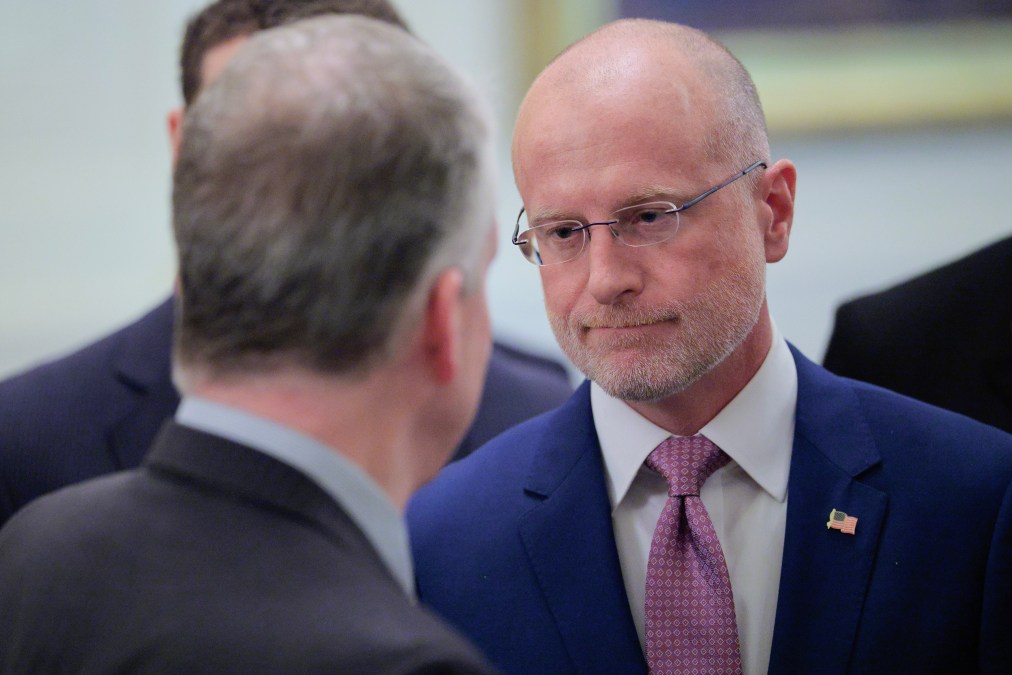
In justifying the decision, FCC Chair Brendan Carr cited a March 20 White House-led interagency report that concluded foreign-made routers pose “unacceptable” risks to U.S. national security.
“Following President Trump’s leadership, the FCC will continue [to do] our part in making sure that U.S. cyberspace, critical infrastructure, and supply chains are safe and secure,” Carr said.
U.S. policymakers have worried about the potential cybersecurity risks of relying on technology and equipment from countries like China or Russia, where local laws compel domestic companies to cooperate in national security investigations and hand over sensitive data.
In 2024, members of Congress called for the Department of Commerce to investigate Chinese Wi-Fi and router makers like TP-Link, alleging the company’s “unusual degree of vulnerabilities and required compliance with [Chinese] law” amounted to an unacceptable national security risk.
Last year, five House Republican committee chairs urged Commerce Secretary Howard Lutnick to use the department’s authority “to eliminate products and services created by China and other foreign adversaries from domestic supply chains that are shown to have the potential to introduce security vulnerabilities.” An attached list of industries “needing immediate action” included routers and Wi-Fi, while mentioning TP-Link and Huawei as “Chinese or Chinese-controlled” entities.
While router insecurity is a major problem, it’s worth noting that American-made products are far from immune to foreign hacking. Major Chinese hacking campaigns, such as Salt Typhoon, succeeded not because of backdoors in Chinese-made tech but through the exploitation of known, previously reported vulnerabilities in U.S. and Western products.
One former U.S. intelligence leader told CyberScoop that country of origin matters more when you’re dealing with an adversary like China, which has national security and vulnerability disclosure laws that require Chinese router companies to disclose cybersecurity vulnerabilities to the government first.
But it’s not just Chinese routers, or those made by America’s direct rivals, that concern intelligence officials.
Even in a global, digitally connected world, proximity still matters. Foreign countries can more easily disrupt or infect the supply chain of neighboring or bordering countries that may rely on similar parts, components or internet infrastructure.
“Attackers have so many options with what can be done with router access. [It’s] even easier if you have the country that runs and accesses them in your backyard,” said the official, who requested anonymity to speak candidly.
Investors may be drawing similar conclusions. Notably, stocks for Asian router companies fell following the FCC announcement, while U.S. company NetGear, which does not rely on Chinese supply chains, saw its shares jump 12%.
A new point of leverage
The broad nature of the order — along with the ability to dole out exemptions to specific companies at will — effectively resets the regulatory relationship between foreign router companies and the U.S. government. Under it, each company with manufacturing operations in China or overseas would have to petition the FCC for an exemption to the rule.
The ambiguity behind what, specifically, a company would need to do to obtain an exemption could open the process up to potential abuse or political patronage, experts said.
A former FCC official told CyberScoop they were puzzled by the move, and questioned whether it was related to national security or if it would even pass legal muster in the courts.
Instead of adding targeted companies with foreign ties or a history of cybersecurity vulnerabilities to the list of banned providers — as the government has done and successfully defended in court in the past — the FCC instead sought to ban all foreign-made routers around the globe. That represents a potentially significant disruptive action to take in an environment where many businesses and governments today use TP-Link and other foreign companies for their internet needs.
The net effect is “actually creating a new federal program of conditional approvals” for foreign router companies, the FCC alum said, one that is so broad it would take a massive combined federal effort to effectively remove bad actors from the foreign supply chain.
“I have a hard time believing that this administration — given what we’ve seen at CISA and other agencies and the mass departures — will actually roll out a sophisticated and tailored program to adequately address this kind of huge swing of an entire base of consumer products,” said the official, who was granted anonymity to speak candidly.
The official pointed to an attempt earlier this year by the administration, through the Federal Aviation Administration, to assert broad authority to regulate drone flights across the country, saying there were similar “big swing” parallels to the legal rationale here. The drone ban is currently being challenged in court, and the official said they expect the FCC’s router order to be subject to similar lawsuits from companies.
Earlier this month, Carr also proposed new regulations that would place English language requirements on offshore call centers and asked the public for insight on potential policies to “encourage” companies to set up U.S.-based call centers, “including limits on call volume from overseas call centers.”
Carr said the FCC was also “opening up a new front in our efforts to block illegal robocalls from abroad by examining the targeted use of tariffs or bonds.”
The former FCC official said Carr’s prioritization on novel application of tariff authorities while discussing the implementation of two laws — the TRACED Act and the Truth In Caller ID Act — that are unrelated to trade makes it impossible to disentangle the agency’s genuine national security concerns from the Trump administration’s broader attempts to gain leverage over foreign companies in their trade fights.
“Those are weird kind of random hops that seem to be in response to this broader picture of the big tariff decision that came out,” the official said.