Why the Axios attack proves AI is mandatory for supply chain security
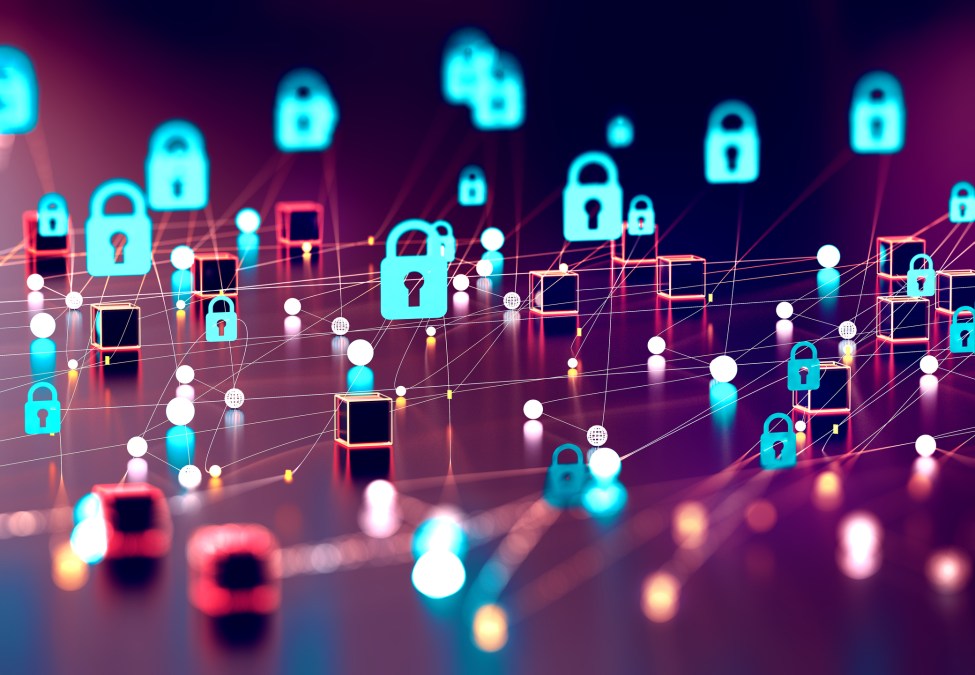
Two weeks ago, a suspected North Korean threat actor slipped malicious code into a package within Axios, a widely used JavaScript library. The immediate concern was the blast radius: roughly 100 million weekly downloads spanning enterprises, startups, and government systems. But beyond the sheer scale, the attack’s speed was just as worrisome – a stark reminder of the tempo modern adversaries now operate at.
The Axios compromise was identified within minutes of publication by an Elastic researcher using an AI-powered monitoring tool that analyzed package registry changes in real time. The approach was right: AI classifying code changes at machine speed, at the moment of publication, before the damage compounds. By any standard, it was a fast response. The compromised package was removed in about three hours. But even in those three hours, the widely-used package may have been downloaded over half a million times.
This underscores a new reality. Enterprises and the public sector are being overwhelmed with attacks that are increasing in both speed and complexity, driven in part by AI. Adversaries are probing every link in the supply chain, and they are doing it at a pace that human-speed defenses cannot match.
This project is one example of using AI to tackle a security problem, but it also makes a broader case: AI-powered security can dramatically improve SOC efficiency especially when organizations across the public sector and beyond are drowning in attacks.
The direct threat to the public sector
Government agencies increasingly rely on the same open-source JavaScript frameworks as the private sector, so a poisoned package can give an adversary access to sensitive systems before anyone realizes the supply chain has been poisoned. This is a direct threat to national security and critical infrastructure, especially when the payloads are cross-platform, affecting macOS, Windows, and Linux.
What is most critical now is understanding and correctly preparing for the frequency and speed at which these attacks occur.
AI has fundamentally lowered the barrier to sophisticated cyber operations, granting relatively unsophisticated bad actors and small nation-states capabilities once reserved for elite criminal groups and countries. Adversaries now leverage AI to automate reconnaissance, craft convincing social engineering, and develop evasive malware. With a new vulnerability discovered every few minutes, the pace is accelerating.
For the public sector, the threat model has expanded. Defending against known nation-state playbooks is no longer sufficient—that’s just the baseline. Groups that couldn’t execute at nation-state levels five years ago now operate with comparable sophistication, while state-sponsored actors operate with unprecedented speed and automation. Staying ahead means moving beyond traditional defense to meet a threat landscape that is increasingly automated and ubiquitous.
AI is not optional
Adversarial AI is the defining threat of the current operating environment. Automated reconnaissance. AI-generated obfuscation. Machine-speed deployment across multiple vectors simultaneously. The adversary has implemented AI faster and more aggressively than most defensive teams.
It is rapidly becoming unquestionable in security: if you are not using AI to battle AI, you will lose.
That does not mean buying into the autonomous SOC fantasy. That approach treats AI in isolation, as if defenders are the only ones with access to the technology. Defensive AI is not a win button, but the minimum entry fee to stay level with the attacker. You still need business context, mission knowledge, and human judgment.
The agentic SOC transformation
The Axios compromise should serve as a clear signal. Nation-state actors are targeting the software supply chain with increasing frequency and sophistication. The government agencies and organizations that will defend successfully against these threats are the ones building security operations that can move just as fast as the threat actors they face.
AI-driven security operations that can match the speed of modern threats, like agentic workflows that automatically triage, investigate, and contain suspicious activity are operationally necessary. Having an agentic SOC mindset and approach to how these centers work will empower analysts’ activity. Agents will operate on behalf of the analyst automatically and transparently.
The traditional SOC pyramid puts humans at the bottom doing the highest-volume work. A wide analyst tier triaging alerts, feeding a narrower senior tier handling investigations. Adversarial AI has made that base layer untenable. The volume is too high, the speed too fast, the surface area too broad. The pyramid inverts into a diamond – AI takes the base while analysts rise to become threat engineers: managing, validating, and improving the agents working on their behalf.
AI agents handle the high-volume work of alert correlation, investigation enrichment, and initial containment while human analysts focus on strategic decisions and mission context. These agents amplify the expertise that government security professionals bring, delivering pre-investigated, correlated findings rather than a flood of disconnected alerts.
The rapid acceleration of sophisticated attacks calls for this essential change across the SOC. The public sector and industry are undergoing a significant transformation, shifting away from eyes-on-glass alert triage toward a high-impact era of threat engineering. In doing so, public sector teams will have the ability to greatly reduce mean time to detect/respond, in turn reducing SOC analyst fatigue and compressing investigation timelines.
Mike Nichols is the GM of Security at Elastic.