The popular phishing-as-a-service platform used AI throughout the attack chain, allowing cybercriminals to steal tokens for account takeover and business email compromise.
Laundry Bear exploited a zero-day vulnerability for five months before it was patched in November 2025, and the group is still actively exploiting vulnerable environments.
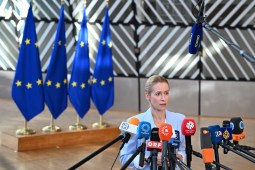
13 July 2026, Belgium, Brüssel: Kaja Kallas, the EU’s High Representative for Foreign Affairs, is giving an interview in the hallway of the European Council ahead of the meeting of the foreign ministers of the EU member states. They are set to discuss the situation in the Near and Middle East as well as in Ukraine this Monday in Brussels. Photo: Michael Brandt/dpa (Photo by Michael Brandt/picture alliance via Getty Images)
The EU, its members and the U.K. took action against Russian government officials and others while attributing the winter cyberattacks against Poland’s energy grid to the FSB.
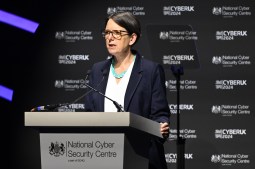
In this handout image provided by CYBERUK, Anne Keast-Butler, Director, GCHQ speaks during the CYBERUK 2024 at Birmingham ICC Arena on May 14, 2024 in Birmingham, England. (Photo by Matthew Horwood for CYBERUK via Getty Images)
Anne Keast-Butler, head of the GCHQ, said her agency was developing an artificial intelligence-powered cyber shield as other nations were deploying AI in warfare.
Forest Blizzard, a threat group attributed to Russia’s GRU, hijacked network traffic to steal credentials and tokens for Microsoft accounts and other services.
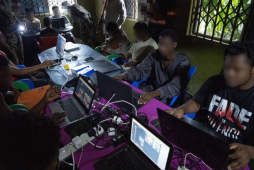
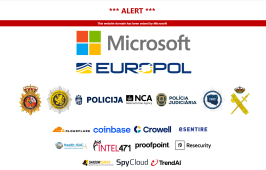
Microsoft and authorities dismantled Tycoon 2FA’s infrastructure. A seizure notice is displayed on of the phishing platform’s domains March 4, 2026. (Microsoft)
Microsoft, which led the effort, said it seized 330 domains that powered the phishing platform’s core infrastructure. The alleged creator was also named in a civil complaint.