Advertisement

Department of Homeland Security (DHS)

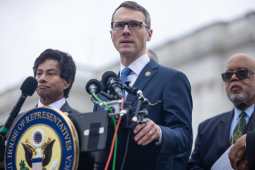
Congressman James Walkinshaw, D-Va., speaks at a press conference with other Democratic members of House Homeland Security Committee (including Sri Thanedar, D-Mich., left, and Bennie Thompson, D-Miss., right) on the killing of Renee Good, outside the U.S. Capitol on January 14, 2026. (Photo by Nathan Posner/Anadolu via Getty Images)

Dems seek top-to-bottom assessment of CISA workforce

After the exit of around 1,000 CISA workers, legislation from three top House Democrats orders a force structure assessment like that more common to military branches.
In recent conversations, cybersecurity and national security professionals  raised questions about both the technical solutions OpenAI and Anthropic use to contain their models, as well as the glaring absence of federal oversight from federal regulators or truly independent third-party review. (Image via Getty)

The AI hacking apocalypse is not inevitable

While large language models present real risks to society, experts say they can be tested and largely controlled using well-worn cybersecurity and policy choices.
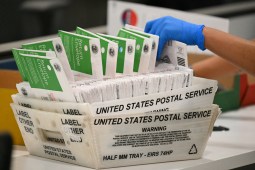
An election worker processes mail-in ballots at the Los Angeles County Ballot Processing Center during California’s state primary election in the City of Industry, California, on June 2, 2026. Californians go to the polls Tuesday in the first round of voting for a new governor, with a tight three-way race for two run-off spots, while people in Los Angeles will also be voting for a new mayor. The state’s so-called “jungle primary” pits all comers against each other — regardless of party — with the top two vote-getters advancing to the November general election to replace term-limited Governor Gavin Newsom. (Photo by Patrick T. Fallon / AFP via Getty Images)

SCOTUS tosses one of two injunctions against Trump USPS mail-in ballot rules

The 6-3 decision dismisses one lawsuit brought by states, saying they have no standing to sue because the disputed sections “neither requires nor forbids anything of anyone outside…
A data center in Vernon, Calif. They are groups calling for AI, and the technology it sits on, to be designated as critical infrastructure. (Getty Images)

The push to designate AI as the next critical infrastructure sector

The designation would unlock a range of federal services, tools and resources for an industry that policymakers view as increasingly tied to national and economic security.
Advertisement
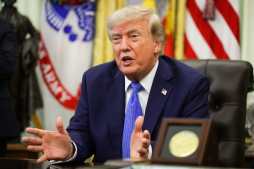
President Donald Trump speaks during an event in the Oval Office of the White House on August 06, 2026 in Washington, DC. President Trump is expected to sign two executive orders on bringing computer chip manufacturing to the U.S. and denying birthright citizenship to children of foreign diplomats. (Photo by Alex Wong/Getty Images)

Trump turns to private sector in offensive hacking operations memo

One expert called it a “pretty big shift in U.S. cyber policy,” and there have been reservations in the past about opening the door to private sector…
The GAO found 80 out of 117 rules that “either contain the same kind of reporting requirement applicable to a sector or the same reporting requirement as at least one other regulation.” (Getty Images)

Most federal cybersecurity reporting rules are duplicative, study finds

The Government Accountability Office looked at 117 rules across 37 agencies and found 70% had reporting requirements that were overlapping.
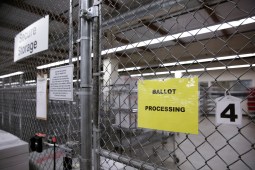
A secure storage area is pictured as vote-by-mail ballots for the August 4 Washington state primary are processed at King County Elections in Renton, Washington on August 3, 2020. (Photo by Jason Redmond / AFP) (Photo by JASON REDMOND/AFP via Getty Images)

States are building their own election defense networks as federal support evaporates 

Election officials are facing an impossible choice: follow federal directives they don’t trust, or risk becoming targets of a criminal investigation.
Advertisement
Advertisement
Advertisement