Lawmakers leery about Trump administration’s Anthropic order
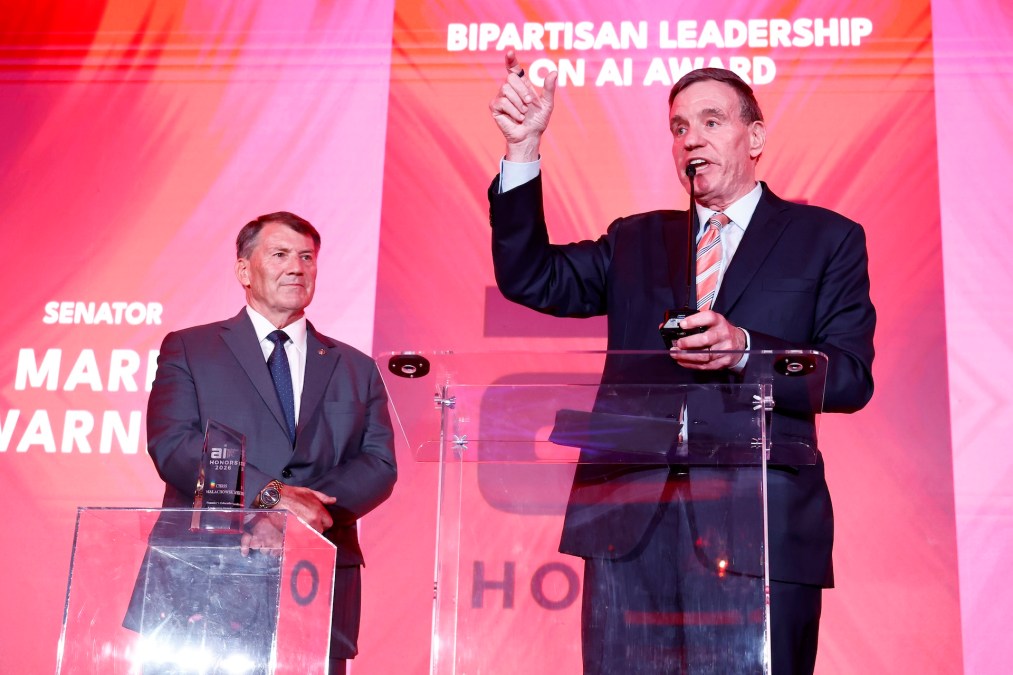
Members of Congress responded with skepticism and caution Tuesday to the Trump administration’s decision to impose export controls on Anthropic’s newest AI models.
The Friday order, which Anthropic said forced it to disable its Fable 5 and Mythos 5 artificial intelligence models, was prompted by what the administration said were national security concerns that a large number of cybersecurity professionals have dismissed as ill-founded.
Several Hill Democrats told CyberScoop they were concerned that the administration’s decision was driven by other considerations. Notably, the administration has feuded with Anthropic over use of its models for domestic surveillance and fully autonomous weapons.
Sen. Angus King, a Maine independent who caucuses with Democrats, said he would need to be convinced it was a legitimate national security order and hadn’t yet seen a full justification.
“What they did was pretty extreme, and I’d want to see what the basis was, as opposed to all the other issues that are swirling around in cybersecurity,” he said. “I’m a little skeptical because of their otherwise announced antipathy to this company.”
Leaders of the House Homeland Security Committee had contrasting takes, with Chairman Andrew Garbarino, R-N.Y., offering a two-pronged response and the top Democrat on the panel, Bennie Thompson of Mississippi, panning the order.
“The administration is right to treat advanced AI cyber capabilities as a national security issue, especially when foreign adversaries and cybercriminals are actively looking for ways to weaponize these tools,” Garbarino said in a statement. “At the same time, we need to make sure our response does not unintentionally disadvantage American companies, allied partners, or critical infrastructure defenders who need access to the best secure tools available in order to protect our networks here at home.”
The United States, not China, needs to set standards for trusted AI, Garbarino said.
But Thompson said the order adds evidence to the appearance that the Trump administration doesn’t “have a coherent plan for mitigating the cybersecurity risks” of frontier AI models, he told CyberScoop in a statement.
“AI regulations should rely on standards and procedures that provide confidence to the public that decisions are based on the evidence and not on politics,” he said. “Instead, the Trump administration has adopted an ad hoc approach where decisions are made by political appointees in the White House rather than experts and where companies are left guessing on how to comply.”
Virginia Sen. Mark Warner, the top Democrat on the Intelligence Committee, had also previously highlighted the administration’s quarrel with Anthropic in response to the order in a statement to CyberScoop.
Behind the scenes, the administration and Anthropic were reportedly continuing to try to forge a truce Tuesday. More broadly, the administration’s AI executive order had a rocky rollout as the administration swung back-and-forth on how involved the government should be.
Some lawmakers deferred on commenting Tuesday, such as Senate Homeland Security Committee Chairman Rand Paul, R-Ky., who told CyberScoop he didn’t have anything to say on the order.
Others said they were still seeking information from the administration.
“I have not had the opportunity to get a brief specifically as to the logic, the reasoning behind it, and so forth,” said Sen. Mike Rounds, the South Dakota Republican who chairs the Armed Services Subcommittee on Cybersecurity. “So I’m going to withhold judgment until I get an opportunity to get the rest of the story, so to speak.”