Federal Bureau of Investigation seal is seen on J. Edgar Hoover FBI Building in Washington D.C. on July 12. (Photo by Beata Zawrzel/NurPhoto via Getty Images)
The arrest of a 24-year-old man in Amsterdam, which occurred a week before ShinyHunters hacked the FBI, marks a major turning point for law enforcement’s push to…
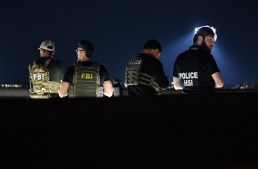
Federal law enforcement agents from Homeland Security Investigations and FBI guard a high school football game at Cardozo Education Campus in Washington, D.C., September 12, 2025. A cybercriminal group known as ShinyHunters is claiming to have stolen data on every FBI agent. (Photo by Astrid Riecken For The Washington Post via Getty Images)
Cybercrime experts are stunned as ShinyHunters risks agent safety and intense federal heat in a bizarre attempt to force the retraction of an agency advisory.
The major healthcare sector vendor did not identify the attackers, but ShinyHunters, a prolific group increasingly targeting the sector, claimed responsibility.
The threat group’s remarkable success targeting open-source software was inevitable and fueled by the industry’s decision to prioritize code shipping over security.
The company said it found more evidence of compromise across its customer base. Exposure, which has yet to be defined, poses significant downstream risk.
The attack, which originated at Context.ai, showcases the pitfalls of interconnected cloud applications and SaaS integrations with overly privileged permissions.
Light reflects off glass panels on Salesforce Tower through the fog in San Francisco on July 31, 2018. (Carlos Avila Gonzalez/The San Francisco Chronicle via Getty Images)
Researchers said the threat group behind the campaign is associated with ShinyHunters, an outfit that’s previously stolen data from Salesforce instances for extortion attempts.