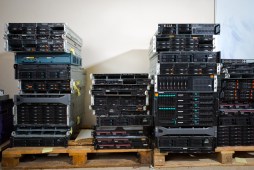
The government spends this $80 billion a year simply to keep old systems secure while adversaries invest in new technologies and techniques to infiltrate them. (Getty Images)
With 80% of federal IT budgets spent maintaining aging legacy systems, fragmented government networks are struggling to defend against AI-accelerated cyberattacks from foreign adversaries.
AI systems are learning to exploit loopholes in everything from software to tax law. The biggest threat may not be malicious intent, but machines doing exactly what…
In this photo illustration, the United States Cybersecurity and Infrastructure Security Agency (CISA) logo is seen displayed on a smartphone screen. (Photo Illustration by Thomas Fuller/SOPA Images/LightRocket via Getty Images)
Once data is in use, encryption falls short. A tested approach that replaces sensitive values with realistic substitutes could make stolen information far less useful to hackers.
New federal programs take years to launch and fund. State and local governments need cybersecurity software now. The One Big Beautiful Bill already enables tax incentives. Congress…
An AI compact built around capability, control, and continuity can ensure the country stays safe and secure while also leading the world in the technology.
A US Army Stryker seen moving towards the ARC Defender vessel at the Baltic Container Terminal in Gdynia.
The US Army transports military equipment from Poland to the United States after being deployed for 9 months. It is the long-term rotation of the equipment. Another unit arrives to train together with the troops of Great Britain, Croatia and Romania as part of joint military maneuvers in Poland and in some parts of Europe. (Photo by Mateusz Slodkowski/SOPA Images/LightRocket via Getty Images)