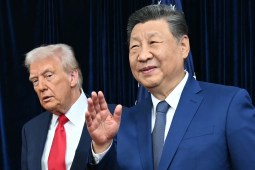
President Donald Trump, left, and China’s President Xi Jinping arrive for talks at the Gimhae Air Base, located next to the Gimhae International Airport in Busan on October 30, 2025. Trump and Xi have both been publicly impassive about cyber operations in the past few months.(Photo by ANDREW CABALLERO-REYNOLDS / AFP) (Photo by ANDREW CABALLERO-REYNOLDS/AFP via Getty Images)
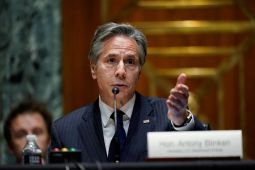
Secretary of State Antony Blinken testifies during the Senate Appropriations Subcommittee on State, Foreign Operations, and Related Programs hearing on Capitol Hill in Washington, DC on April 27, 2022. The new agreement reached between the White House, the State Department, and the Treasury Department gives State new authorities to monitor cyber ops. (Photo by Carolyn Kaster / POOL / AFP) (Photo by CAROLYN KASTER/POOL/AFP via Getty Images)
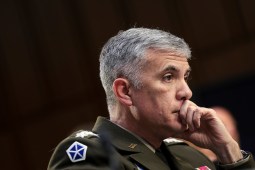
National Security Agency (NSA) Director and U.S. Cyber Command chief Gen. Paul Nakasone testified before the Senate Intelligence Committee on March 10, 2022 (Photo by: Kevin Dietsch/Getty Images)
The Biden administration is considering revising the Trump-era policy that gave broad cyber authorities to the Department of Defense and Cyber Command.
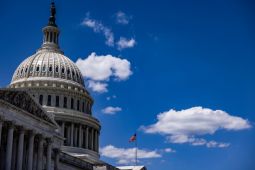
WASHINGTON, DC – JUNE 16: The American flag flies above the U.S. Capitol building during a press conference on Capitol Hill. (Photo by Samuel Corum/Getty Images)
Top security leaders testified in front of the House Homeland Security Committee's first cyber-focused hearing of 2021, with the SolarWinds hack taking center stage.
The process establishes a Cyber Unified Coordination Group (UCG) that is intended to help the U.S. government coordinate multiple agencies' responses to an event like the SolarWinds…
The Cyber Threat Alliance denied Kaspersky entry into the group due to the group's president, former cybersecurity coordinator Michael Daniel, weighing on information he was privy to…