UNITED STATES – DECEMBER 10: Rep. Pat Harrigan, R-N.C., arrives for the House Republican Conference meeting in the U.S. Capitol on Wednesday, December 10, 2025. (Bill Clark/CQ-Roll Call, Inc via Getty Images)
One of the bill’s sponsors told CyberScoop it’s “incredibly expensive” for U.S. AI companies to stay ahead and distillation attacks incentivize stealing over innovation.
Biotechnology doesn’t have its own critical infrastructure designation, so the bipartisan group of lawmakers wants to make sure it’s protected like it.
Boston, MA – August 29: Senator Ed Markey addresses his supporters during a ‘Power to the People’ rally at the IBEW Local 103 facility on August 29, 2026. (Photo by Craig F. Walker/The Boston Globe via Getty Images)
A new Democratic bill in Congress would establish a federal Cybersecurity and AI Board of Investigations to provide independent government oversight of cyberattacks carried out by AI…
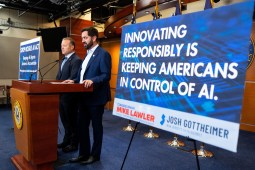
Rep. Josh Gottheimer, D-N.J., left, and Rep. Mike Lawler, R-N.Y., hold a news conference on the Stop Rogue AI Act in the U.S. Capitol on Thursday, September 17, 2026. (Bill Clark/CQ-Roll Call, Inc via Getty Images)
A key House Democrat and his bipartisan sponsors want to see a $100 million DHS pilot to help critical infrastructure owners and operators — separate from another…
US President Donald Trump (C) and Open AI CEO Sam Altman (L) react during a working lunch meeting of G7 members, partner countries, and artificial intelligence business leaders as part of the G7 summit, in Evian, eastern France, on June 17, 2026. A G7 summit is set to take place June 15 to 17 in the French town of Evian-les-Bains near Switzerland and it will be attended by country leaders as well as the EU’s foreign policy chief and ministers from Brazil, Canada, the United Arab Emirates and Turkey. (Photo by Ludovic MARIN / AFP via Getty Images)
Following a series of chaotic agentic hacks, Trump and administration officials have consistently expressed fears of Chinese AI dominance in pushing for fewer regulations.
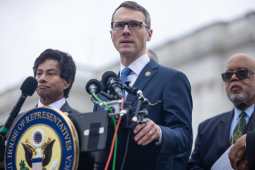
Congressman James Walkinshaw, D-Va., speaks at a press conference with other Democratic members of House Homeland Security Committee (including Sri Thanedar, D-Mich., left, and Bennie Thompson, D-Miss., right) on the killing of Renee Good, outside the U.S. Capitol on January 14, 2026. (Photo by Nathan Posner/Anadolu via Getty Images)
After the exit of around 1,000 CISA workers, legislation from three top House Democrats orders a force structure assessment like that more common to military branches.
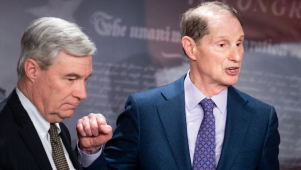
Sen. Sheldon Whitehouse, D-R.I., left, and Sen. Ron Wyden, D-Ore., participate in a news conference in the Capitol on March 9, 2023. (Bill Clark/CQ-Roll Call, Inc via Getty Images)
The groups have allegedly targeted American citizens and companies, including the wife of GOP Senate candidate Mike Rogers, a former representative running in a Michigan swing race.
The Federal Ballot Mail Portal is described by a federal official as one of several IT systems that will be used to potentially deny thousands of mail-in…