CyberScoop spoke with members of Congress, former federal law enforcement officials, cybersecurity attorneys and other experts about which laws, regulations or policies might apply to agentic hacks carried out by models at Anthropic, OpenAI, Meta, Google and other companies. (Image via Getty)
Experts and policymakers want AI companies to face consequences for agentic hacks. There may not be a clear-cut answer under existing laws and regulations.
In recent conversations, cybersecurity and national security professionals raised questions about both the technical solutions OpenAI and Anthropic use to contain their models, as well as the glaring absence of federal oversight from federal regulators or truly independent third-party review. (Image via Getty)
While large language models present real risks to society, experts say they can be tested and largely controlled using well-worn cybersecurity and policy choices.
OpenAI confirmed it was investigating an incident in May where the company’s AI agents uploaded thousands of malicious software packages to a public code repository RubyGems. (Source: RubyGems)
OpenAI confirmed their agents were behind a campaign in May that researchers say flooded the popular online code repository with malicious software packages.
AI generates 2.5 signals for every human-triggered signal CrowdStrike has to assess. Meanwhile, attackers are using AI to weaponize vulnerabilities faster than companies can patch them.
Ely Kahn, Okta's chief product officer, told CyberScoop the deal enriches the company's current threat detection tools and gives it deeper visibility into AI agent activity across…
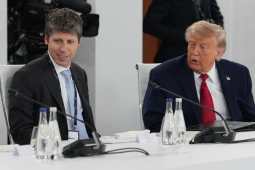
US President Donald Trump (R) and Open AI CEO Sam Altman (L) react during a working lunch meeting of G7 members, partner countries, and artificial intelligence business leaders as part of the G7 summit, in Evian, eastern France, on June 17, 2026. The Trump administration has been moving to regulate AI models for cybersecurity use. (Photo by Julia Demaree Nikhinson / POOL / AFP via Getty Images)
The messy approach to U.S. AI regulation reflects both the rapid speed of model cyber capabilities and the White House’s “education” over the past two years, experts…
The AI agent didn’t accomplish every step in the late June 2026 attack, but it allowed the threat actor to significantly reduce complexity, speed up the tempo…
The guidance warns that agents capable of taking real-world actions on networks are already inside critical infrastructure, and most organizations are granting them far more access than…