Lawsuit against Ex-Overstock CEO tied to 2020 election film falls apart over question of ‘actual malice’
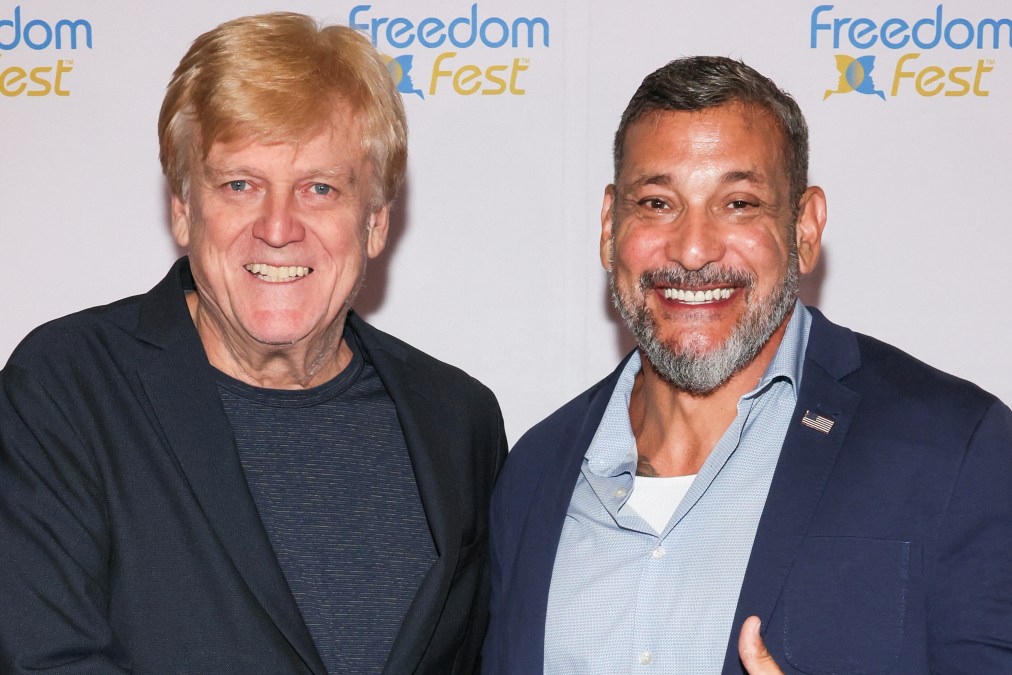
A Florida judge ruled this week that ex-Overstock CEO Patrick Byrne is not liable in a lawsuit brought by a Dominion Voting Systems executive over a film that accuses the former electronic voting hardware and software company executive of saying he “made sure” that Republican presidential candidate Donald Trump wouldn’t win reelection in 2020.
The lawsuit, brought in 2022 by Eric Coomer, a former director of product strategy and security at Dominion Voting Systems, concerns comments made in a 2020 film produced by Byrne titled “The Deep Rig.”
In the film, which alleges a conspiracy to manipulate 2020 election results in favor of Democrat Joe Biden, a man identified as Joseph Oltmann claimed he listened to a conference call led by organizers of “Antifa,” wherein another participant mentioned that “Eric” “The Dominion Guy” was also on the call.
In the film, Oltmann says a man identified as “Eric” told others on the call that Trump wouldn’t win reelection because he had “made sure of it.” Coomer denies taking part in any such call, and filed a lawsuit against Byrne and seven other individuals and entities for defamation.
U.S. District Judge Tom Barber’s decision did not address most of the substantive claims in the lawsuit, such as Byrne’s ultimate legal responsibility for the statements by Oltmann that made it into the film.
Because the lawsuit was originally filed in Colorado, it must meet a state law requirement for defamation claims involving matters of public concern. Coomer must show “clear and convincing evidence” that Byrne or others involved in making the film knew the claims were false and defamatory, or acted with reckless disregard for the truth.
“Where the challenged speech involves a matter of public concern, as it undeniably does here, the plaintiff also bears the burden of proving, by clear and convincing evidence, that the challenged statement is materially false and was made with actual malice,” wrote Barber in his opinion.
The standard is not whether a reasonable person would have investigated the claims before airing them, but whether the defendant “in fact entertained serious doubts as to the truth of [the] publication, or was highly aware of its probable falsity.”
In this case, Barber said it’s not impossible to clear that standard for public figures, but under Colorado law, Coomer would have a hard time providing clear and convincing evidence that Byrne “in fact subjectively disbelieved or had serious doubts about Oltmann’s story.”
Barber further wrote that technology has given “a powerful microphone” and large followings to people who would otherwise be dismissed as “kooks” and conspiracy theorists. These people make statements that are “objectively and demonstrably wrong” but who hold firm to their core beliefs because they “genuinely and sincerely believe what they say with every fiber of their being, even when objective evidence may suggest otherwise.”
Still, he said the current language and meaning of the Colorado law is clear, suggesting it was a matter for higher courts or legislators to clarify or change.
“Under the actual malice standard, unless it can be proven that the speaker subjectively believed his or her statements to be untrue, the law imposes no liability,” Barber wrote. “That is a policy choice that might deserve reexamination by the appropriate decision makers – the United States Supreme Court and the Colorado courts.”
Byrne’s attorney, Peter Ticktin, called the ruling a “victory” in a statement to CyberScoop.
“This is a substantial victory for Patriot Patrick Byrne and for the principles at stake in this case,” Ticktin said. “The court’s decision speaks for itself. We are pleased that the facts and applicable law resulted in summary judgment in our client’s favor.”
Coomer sued Byrne in his personal capacity, and Dominion Voting Systems was not a party to the lawsuit.
The voting machine giant was awarded more than $1.8 billion in combined legal settlements over the past two years from Fox News, Newsmax and MyPillow CEO Mike Lindell, all of whom made allegations that Dominion voting machines were used to maliciously flip or alter votes.