DOJ sues Fulton County over 2020 voter data
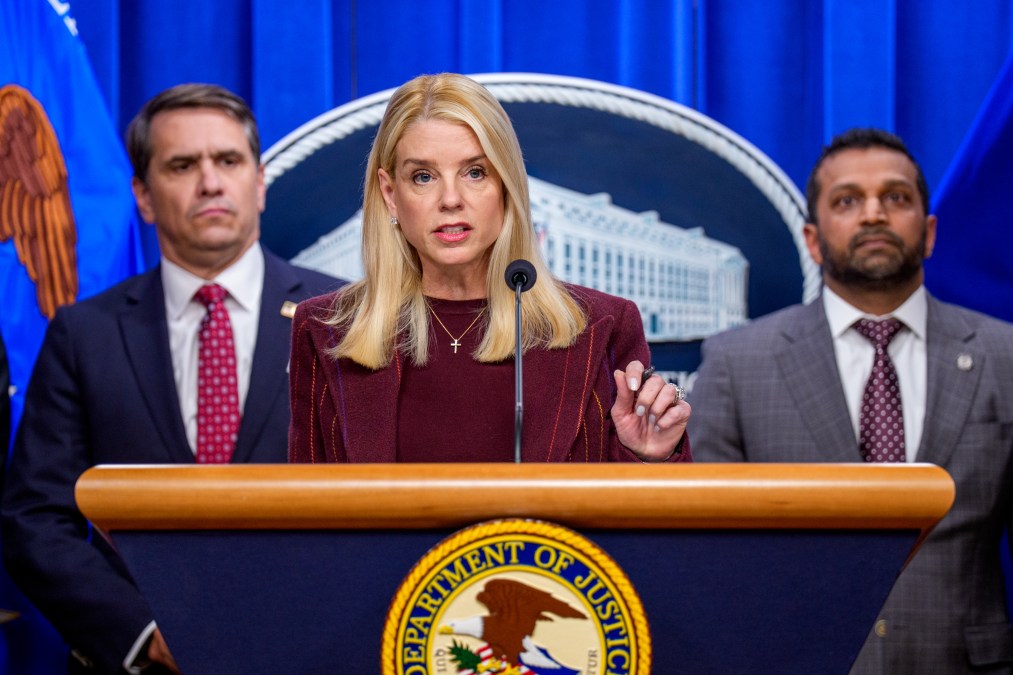
The Department of Justice is suing Fulton County, Georgia and its election clerk over the county’s refusal to hand over voter records, part of a larger nationwide project to collect as much election and voter information as possible from state and local governments ahead of the 2026 and 2028 elections.
In a lawsuit announced Thursday, DOJ officials said they were suing Fulton County clerk of courts Ché Alexander, arguing that Alexander had a legal duty under the Civil Rights Act to hand over the information as the Department investigates what it claims are potential county violations of the National Voter Registration Act and Help America Vote Act.
In court documents filed with the Northern District of Georgia, Harmeet Dhillon, Assistant Attorney General for the Civil Rights Division and Eric Neff, Acting Chief of the division’s voting rights section, argued that the court should not “adjudicate the factual foundation for, or the sufficiency of, the Attorney General’s ‘statement” or “the basis and the purpose’ contained in the written demand.” They also argued the court should not scrutinize the scope of the data requested in the subpoena.
“The Attorney General need only show that she made a ‘written demand’ for records covered by Section 301 of the [Civil Rights Act] and that ‘the person against whom an order for production is sought … has failed or refused” to make such papers available for inspection, reproduction or copying,” wrote Dhillon and Neff.
In October, DOJ subpoenaed the county for “all used and void ballots, stubs of all ballots, signature envelopes, and corresponding envelope digital files from the 2020 General Election in Fulton County.” It cited a request from the Georgia State Election Board to investigate “anomalies” in the 2020 election and the refusal of county officials to hand over the data or respond to federal demands.
The lawsuit against Fulton is one of dozens of lawsuits, investigations, and demands for voter data that the DOJ is pursuing ahead of the 2026 midterm and 2028 presidential elections.
On the same day it announced it was suing Fulton County, the Civil Rights Division added four more states – Colorado, Massachusetts, Hawaii and Nevada — to a growing lawsuit challenging election officials across the country to turn over voter registration data to the federal government. That brings the total number of states DOJ is suing to 18.
According to an online tracker created by the Brennan Center for Justice, DOJ has sent demands to at least 40 states for voter registration data since May, and most have rejected at least some, if not all, the requested records. Just two states, Indiana and Wyoming, have fully complied with the requests.
“Nearly all states that have replied to the DOJ’s requests have not shared their full voter registration databases,” wrote authors Kaylie Martinez-Ochoa, Eileen O’Connor and Patrick Berry. “Instead, most states have provided the publicly available version (which do not include Social Security numbers and driver’s license numbers) or have not provided the voter registration lists at all.”