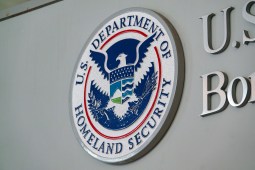
WASHINGTON, DC – AUGUST 8: A Department of Homeland Security logo is seen at their headquarters in the Ronald Reagan Building and International Trade Center on August 8, 2026 in Washington, DC. (Photo by Kevin Carter/Getty Images)
While voluntary, the document marks the federal government’s most detailed cybersecurity guidance for securing sandbox environments during AI model tests.
WASHINGTON, DC – SEPTEMBER 29: (L-R) U.S. Director of National Intelligence Jay Clayton, CEO of Meta Platforms Mark Zuckerberg, Co-Founder at Anthropic Tom Brown, U.S. President Donald Trump and David O. Sacks hold a press briefing with AI executives following a meeting on artificial intelligence, outside the West Wing of the White House on September 29, 2026 in Washington, DC. The meeting comes as some have called for a slowdown in AI development amid rising safety concerns. (Photo by Kevin Dietsch/Getty Images)
The letter argues federal agencies should more rigorously test AI models for security threats and sandbox evasion, set new safety standards and lean into defensive AI.
This photograph shows the G7 sign during the G7 summit, in Evian, eastern France, on June 16, 2026. A working group report from the summit called on countries to speed up adoption of post-quantum encryption. (Photo by Mandel NGAN / POOL / AFP via Getty Images)
NIST is seeking public input to modernize the National Vulnerability Database to keep pace with AI-driven cyber threats and machine-scale security data.
Claude Mythos exposed mathematical weaknesses in a post-quantum candidate and a simplified version of AES, marking a major breakthrough for AI-driven cryptanalysis.
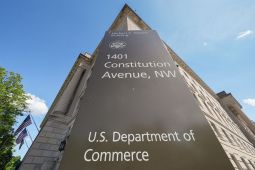
A sign marks the location of the headquarters of the Department of Commerce, home of the National Telecommunications and Information Administration, on April 30, 2025, in Washington, D.C. (Photo by J. David Ake/Getty Images)
The Center for AI Standards and Innovation has quietly become a key hub for the federal government to assess potential threats and harms that AI systems pose.
The government's new AI clearinghouse risks becoming a committee that discovers more problems than it solves — unless it's designed around patching, not just scanning.
A report from the Commerce Inspector General details how mismanagement allowed a backlog of 27,000 unprocessed security flaws to grow unchecked, while the agency duplicated work with…
As fake identity fraud is projected to cause $40 billion in losses next year, leaders must abandon static security in favor of rapid-iteration, AI-enabled defenses that adapt…