Ryan Roach and his alleged co-conspirator, Mathiew Stubbings, are accused of compromising U.S. universities’ computers and taking over processing power to mine for cryptocurrency.
The U.S. District of Columbia’s Scam Center Task Force, the FBI’s field office in Honolulu and the U.S. Attorney’s Office for the District of Alaska made a trip to Madagascar in August to review electronic devices seized from scam compounds. (Getty Images)
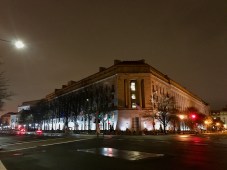
Traffic streaks past the Department of Justice (DOJ) headquarters building late in the evening on May 18, 2024 in Washington, DC. (Photo by J. David Ake/Getty Images)
Zheng Zhao and his co-conspirators allegedly deceived 174 U.S. residents into sending funds to a globally coordinated fake investment operation with ties to Cambodia.
In this pool photograph distributed by the Russian state agency Sputnik, Russian President Vladimir Putin and North Korean leader Kim Jong Un toast during a reception at the Mongnangwan Reception House in Pyongyang on June 19, 2024. Putin enjoyed a red carpet welcome, a military ceremony and an embrace from North Korea’s Kim Jong Un during a state visit to Pyongyang where they both pledged to forge closer ties. (Photo by Vladimir Smirnov / POOL / AFP via Getty Images)
DTEX researchers found a series of transactions in a payment wallet showing North Korean IT worker salaries flowing into sanctioned entities that support the regime’s military programs.
A general view of the DraftKings logo in the outfield during the Major League baseball game between the Philadelphia Phillies and the Washington Nationals on June 22, 2021 at Citizens Bank Park in Philadelphia, PA. (Photo by Rich Graessle/Icon Sportswire via Getty Images)
Abdellah Belmili allegedly ran two black-market websites selling stolen financial credentials and custom-built phishing kits targeting major American banks, federal prosecutors say.
The trio, which share lineage with the more broadly defined Lazarus Group, are focused on espionage and cryptocurrency theft, according to CrowdStrike.
Ianis Antropenko, a Russian national living in California, admitted to committing ransomware attacks against at least 50 victims. He faces up to 25 years in jail.