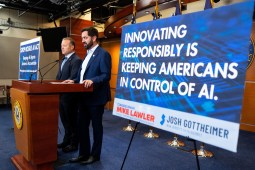
The government's new AI clearinghouse risks becoming a committee that discovers more problems than it solves — unless it's designed around patching, not just scanning.
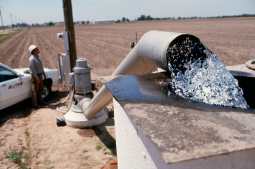
The information sharing effort will allow intelligence community agencies to interact with key owners and operators of water, power, internet and telecommunications to coordinate on cyberattacks and digital vulnerabilities. (Getty Images)
The Department of Homeland Security is bringing back a key cybersecurity information sharing effort with critical infrastructure, more than a year after the Trump administration shuttered an…
US President Donald Trump holds a singed executive order about quantum computing in the Oval Office of the White House in Washington, DC, on June 22, 2026. President Trump signed two orders on quantum computing. (Photo by Mandel NGAN / AFP via Getty Images)
With federal PQC deadlines set for 2030 and 2031, CISOs face a multi-year transformation program that most organizations have not yet started. The window for orderly execution…
The consulting giant’s majority stake in Dragos, along with the purchase runZero and NetRise, marks its first major push into operational technology software as AI-driven threats to…
Acting director Nick Andersen said a binding operational directive is en route for agencies, and that more specific discussions need to happen with critical infrastructure owners.
Governments and financial institutions are reviewing potential cybersecurity risks from the company’s advanced AI model, which has identified thousands of software vulnerabilities but is restricted over misuse concerns. (Photo Illustration by Jonathan Raa/NurPhoto via Getty Images)
Roughly 150 new organizations across critical infrastructure sectors will gain access to Claude Mythos Preview, Anthropic's most capable — and most restricted — AI model.
Reps. Don Bacon, R-Neb., and James Walkinshaw, D-Va., found rare bipartisan agreement that the agency tasked with defending civilian networks has been diminished at a moment when…
The agency will begin targeted assessments meant to help critical infrastructure entities operate while disconnecting OT networks from IT and third-party vendors.
As AI drives deeper dependence across business, supply chains, and national security, the buildings that run the cloud are becoming critical infrastructure — and increasingly attractive targets.
In this handout provided by Amazon, a technician works at an Amazon Web Services AI data center in New Carlisle, Indiana on Oct. 2, 2025. (Photo by Noah Berger/Getty Images via Amazon Web Services)
A hearing of the House Homeland Security panel’s cyber subcommittee weighed whether to designate data centers as a standalone critical infrastructure sector.