Advertisement

Congress

Sean Plankey, of Pennsylvania, responds to questioning during Senate Committee on Homeland Security and Governmental Affairs hearings to examine his nomination to be Director of the Cybersecurity and Infrastructure Security Agency, of the Department of Homeland Security, in the Dirksen Senate office building, in Washington, DC, on Wednesday July 24, 2025. (Mattie Neretin/CNP/Sipa USA)

Sean Plankey re-nominated to lead CISA

President Donald Trump resubmitted his nomination Tuesday after it stalled in the Senate last year.
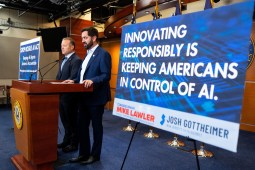
WASHINGTON, DC – MARCH 18: A U.S. flag and the flag of the U.S. Department of Energy fly outside its building on March 18, 2025 in Washington, DC. DEK: Under the Trump administration, the Department of Energy’s cybersecurity office is planning to shift focus from “traditional” research and development to “AI dominance.” (Photo by Alex Wong/Getty Images)

CESER chief touts AI projects as congressional Dems point to federal cuts

A Trump administration official endorsed a slate of congressional bills Tuesday targeting cybersecurity in the energy sector while touting the office’s new emphasis on AI-driven cyber defenses.…
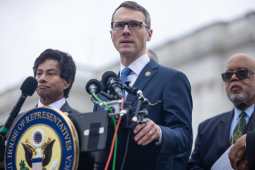
Rep. Andy Ogles, R-Tenn., speaks to reporters before attending an afternoon Republican caucus meeting at the U.S. Capitol on Sep. 29, 2023. (Photo by Chip Somodevilla/Getty Images)

Hill warning: Don’t put cyber offense before defense

A House hearing weighed the pros and cons from the Trump administration and some lawmakers to step up cyber offensive operations.
Some lawmakers and executives say the era of AI-hacking has arrived, while other experts are pointing out the tools of today still fall short in important ways. (Photo credit: CFOTO/Future Publishing via Getty Images)

Policymakers grapple with fallout from Chinese AI-enabled hack

Some lawmakers and executives say the era of AI-hacking has arrived, while other experts are pointing out the tools of today still fall short in important ways.  
 The U.S. Sentencing Commission is seeking public comment on whether the sharing of nonconsensual deepfake porn should be classified under U.S. law as harassment, blackmail or sending obscene material to minors. (Image via Getty)

U.S. Sentencing Commission seeks input on criminal penalties for deepfakes

 The commission is asking whether nonconsensual deepfake porn should be classified under U.S. law as harassment, blackmail or sending obscene material to minors.
Advertisement
Advertisement
Advertisement