Other signatories of the letter include Meta, Palantir, Perplexity, Mistral, NVIDIA, Mozilla, The Linux Foundation, Hugging Face, Dell Technologies and IBM.
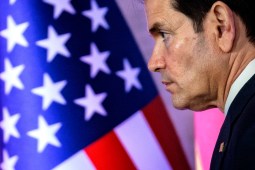
U.S. Secretary of State Marco Rubio attends the 33rd ASEAN Regional Forum (ARF), part of the ASEAN Foreign Ministers’ Meeting, at the Philippine International Convention Center on July 23, 2026 in Pasay, Metro Manila, Philippines. (Photo by Ezra Acayan/Getty Images)
Laundry Bear exploited a zero-day vulnerability for five months before it was patched in November 2025, and the group is still actively exploiting vulnerable environments.
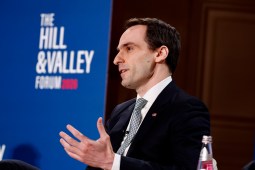
WASHINGTON, DC – MARCH 24: Michael Kratsios participates in the Winning the AI Race: From Strategy to Execution panel during The Hill & Valley Forum 2026 at Andrew W. Mellon Auditorium on March 24, 2026 in Washington, DC. (Photo by Paul Morigi/Getty Images for The Hill & Valley Forum)
While distillation attacks by foreign governments and companies have real national security implications, questions around who ultimately owns the data in AI systems are fraught.
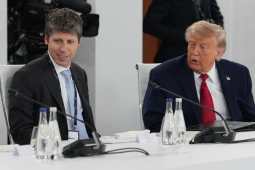
US President Donald Trump (R) and Open AI CEO Sam Altman (L) react during a working lunch meeting of G7 members, partner countries, and artificial intelligence business leaders as part of the G7 summit, in Evian, eastern France, on June 17, 2026. The Trump administration has been moving to regulate AI models for cybersecurity use. (Photo by Julia Demaree Nikhinson / POOL / AFP via Getty Images)
The messy approach to U.S. AI regulation reflects both the rapid speed of model cyber capabilities and the White House’s “education” over the past two years, experts…
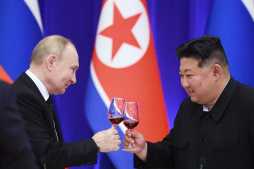
In this pool photograph distributed by the Russian state agency Sputnik, Russian President Vladimir Putin and North Korean leader Kim Jong Un toast during a reception at the Mongnangwan Reception House in Pyongyang on June 19, 2024. Putin enjoyed a red carpet welcome, a military ceremony and an embrace from North Korea’s Kim Jong Un during a state visit to Pyongyang where they both pledged to forge closer ties. (Photo by Vladimir Smirnov / POOL / AFP via Getty Images)
DTEX researchers found a series of transactions in a payment wallet showing North Korean IT worker salaries flowing into sanctioned entities that support the regime’s military programs.
Officials accused three Russian nationals, Media Land and ML.Cloud of supporting cyberattacks spanning 21 U.S. states and other countries, resulting in losses surpassing $62 million.
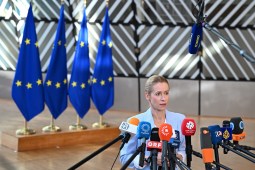
13 July 2026, Belgium, Brüssel: Kaja Kallas, the EU’s High Representative for Foreign Affairs, is giving an interview in the hallway of the European Council ahead of the meeting of the foreign ministers of the EU member states. They are set to discuss the situation in the Near and Middle East as well as in Ukraine this Monday in Brussels. Photo: Michael Brandt/dpa (Photo by Michael Brandt/picture alliance via Getty Images)
The EU, its members and the U.K. took action against Russian government officials and others while attributing the winter cyberattacks against Poland’s energy grid to the FSB.
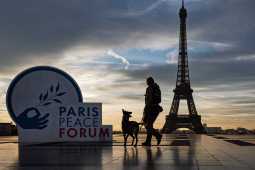
A bomb disposal expert walks with his dog as the sun sets at the Trocadero near the Eiffel Tower before the opening of the Paris Peace Forum in Paris on October 29, 2025. (Photo by JOEL SAGET / AFP) (Photo by JOEL SAGET/AFP via Getty Images)
One of the project’s top goals is stitching together an international, quick response coalition of governments, businesses and civil experts for AI-related threats.