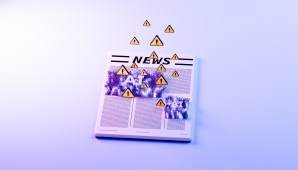
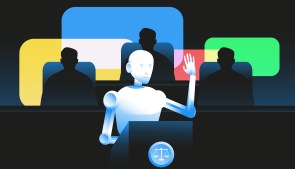
New research from VisionHeight highlights how AI systems can often serve as more useful marks for influence actors than humans. To wit: someone is setting up networks of hyperlocal websites across at least 14 different states, filled with content meant to influence U.S. races. (Image via Getty)
Someone is seeding the internet with hyperlocal content about political races. Researchers say it’s designed to train AI chatbots to favor candidates across a broad range of…
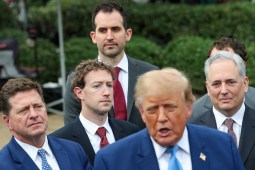
WASHINGTON, DC – SEPTEMBER 29: (L-R) U.S. Director of National Intelligence Jay Clayton, CEO of Meta Platforms Mark Zuckerberg, Co-Founder at Anthropic Tom Brown, U.S. President Donald Trump and David O. Sacks hold a press briefing with AI executives following a meeting on artificial intelligence, outside the West Wing of the White House on September 29, 2026 in Washington, DC. The meeting comes as some have called for a slowdown in AI development amid rising safety concerns. (Photo by Kevin Dietsch/Getty Images)
The letter argues federal agencies should more rigorously test AI models for security threats and sandbox evasion, set new safety standards and lean into defensive AI.
The critical infrastructure defense program will seek to pair Claude models, Anthropic engineers and threat research with the expertise of cybersecurity companies.
U.S. intelligence officials have assessed that the Russian government’s efforts were largely in support of Trump while Iranian influence efforts were primarily targeted towards helping the electoral chances of Democratic candidate Kamala Harris. (Image Source: Getty Images)
Some of the material appeared to be recorded or stolen video of girls through interactions on social media sites like Snapchat, TikTok, Instagram and Facebook.
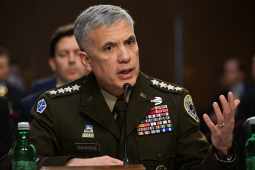
Nakasone, who led the NSA and U.S. Cyber Command from 2018 to 2024, said he found it encouraging that agency leaders recognized the need to adapt. (Getty Images)
Paul Nakasone said the reported reorganization is likely necessary to meet faster-moving cyberthreats and competition in AI, but warned its success will rest on execution and a…
CyberScoop spoke with members of Congress, former federal law enforcement officials, cybersecurity attorneys and other experts about which laws, regulations or policies might apply to agentic hacks carried out by models at Anthropic, OpenAI, Meta, Google and other companies. (Image via Getty)
Experts and policymakers want AI companies to face consequences for agentic hacks. There may not be a clear-cut answer under existing laws and regulations.