Key lawmaker says Congress likely to kick can down road on cyber information sharing law
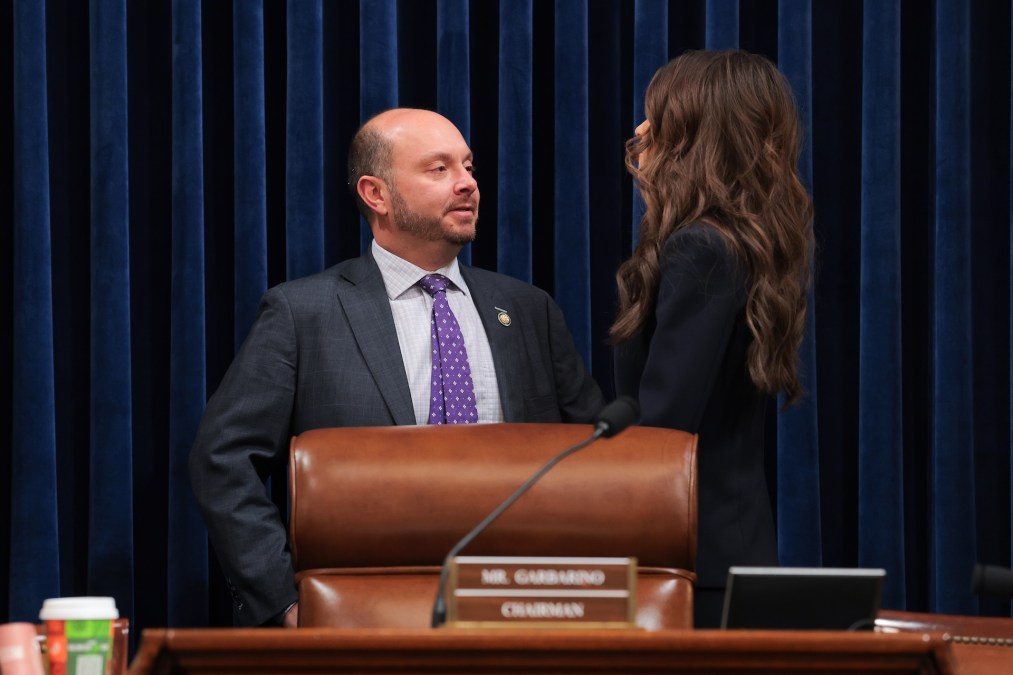
With a little more than a month left before a foundational cyber threat information sharing law expires for a second time, Congress might have to do another short-term extension as negotiations on a longer deal aren’t yet bearing fruit, a key lawmaker said Tuesday.
House Homeland Security Chairman Andrew Garbarino, R-N.Y., said the problem with a long-term extension of the Cybersecurity Information Sharing Act of 2015, which provides legal protections to companies to share cyber threat data with the federal government and other companies, is that there are three different views about how to approach it.
The Trump administration and some in the Senate want a clean, 10-year reauthorization of the law, which Congress extended last month until Jan. 30 as part of the legislation that ended the government shutdown, after the information sharing law lapsed in October. But a reauthorization without any changes could run into House opposition, Garbarino said.
“I don’t know if I can get that passed in the House, with concerns from the Freedom Caucus,” he said at an event hosted by Auburn University’s McCrary Institute. The Freedom Caucus has had criticism of the Cybersecurity and Infrastructure Security Agency that is integral to implementing the 2015 law.
Senate Homeland Security and Governmental Affairs Committee Chairman Rand Paul, R-Ky., also has a version of the bill that focuses largely on language he said is needed to defend free speech. And Garbarino’s version takes yet another approach to tweaking the law.
“Unfortunately, I don’t think we’re close enough with the discussions on the Senate to get it to figure out which bill will pass and what will get done,” Garbarino said. That leaves another extension tied to any funding bill that replaces the legislation currently funding the government, which also runs through Jan. 30.
Garbarino said his committee also is working on other issues, like deconflicting federal cybersecurity regulations, the cyber workforce and responding to the Chinese hacking group Salt Typhoon breaching telecommunications networks.
A report on “regulatory harmonization” has been underway at the committee, he said. But that doesn’t mean he wants to roll all the rules back. Asked about the Federal Communications Commission voting to get rid of Biden administration-era rules put into place in response to the Salt Typhoon breach, Garbarino said, “I’m not sure I would’ve voted to get rid of some of the protections or the rules, but it wasn’t my vote.”
The committee has been probing the government’s response to Salt Typhoon, and recently sent another set of questions in the past two or three months after not getting satisfactory answers the first time, Garbarino said.
“We are working closely with the China Select Committee as to what legislatively we could move if there’s something,” he said. “We’re not there yet.”
Rep. Sheri Biggs, R-S.C., has picked up the baton on cyber workforce legislation sponsored by Garbarino’s predecessor as chairman, and Garbarino said he expects there to be some changes to the bill.
And two House Homeland subcommittees are holding a hearing Wednesday on artificial intelligence and cybersecurity.
“I’ll tell you right now, with our adversaries, the way they’re going to use AI, we can’t defend with human intervention alone,” Garbarino said. “AI is going to have to be part of our cyber defense.”